
Aerides rosea
Aerides rosea
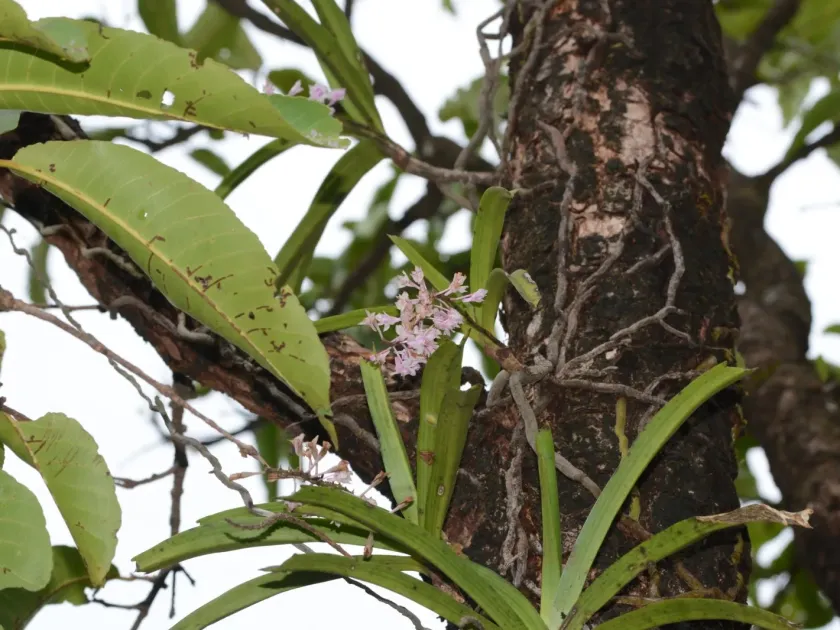
Description
Growing requirements
Aerides rosea is an epiphytic orchid species belonging to the Orchidaceae family, native to the tropical regions of Southeast Asia. In its natural habitat, it thrives on tree branches, which dictates its fundamental requirement for high airflow and moisture levels.
Cultivation of this orchid requires an environment with 70–80% humidity and bright, indirect light. Direct sunlight must be avoided to prevent leaf scorch, which can significantly damage the plant's photosynthetic capacity and overall health.
Temperature management is critical for the success of Aerides rosea. The plant prefers moderate tropical temperatures ranging from 22°C to 28°C during the day, with a mandatory nocturnal temperature drop of 5–7 degrees to initiate healthy development and flowering.
The plant should be grown in hanging baskets or on mounting blocks rather than in pots with heavy soil. This allows for rapid drainage and ensures that the vigorous root system receives adequate oxygen, which is vital for preventing rot.
The ideal substrate consists of coarse pine bark, charcoal, and fern fibers. This mixture provides a structure that holds enough moisture for the roots while ensuring excellent aeration, preventing the development of anaerobic conditions around the root zone.
Main diseases and pests
The primary threats to Aerides rosea are fungal and bacterial rots caused by poor ventilation and excess moisture. If water stagnates in the leaf axils or the substrate, it creates an environment conducive to pathogen growth, leading to rapid decay of the plant tissues.
Pests such as mealybugs and scale insects are common in orchid collections. They hide in leaf junctions and feed on the plant's sap, which can weaken the orchid over time. Regular monitoring and the application of suitable insecticides are necessary for control.
Spider mites can become a major issue in environments with low air humidity. They damage the leaves by piercing the epidermis, leading to a loss of vigor and potential secondary infections. Increasing humidity and misting are effective preventative measures.
Root rot, typically resulting from overwatering or compacted substrate, is a severe threat that can lead to the loss of the plant. Ensuring the substrate is free-draining and that the plant has adequate airflow is the best strategy for preventing this issue.
Viral infections are a serious concern and are often transmitted through non-sterile cutting tools. Once infected, plants cannot be cured and should be isolated to prevent spreading. Always sterilize tools between operations to maintain the health of the entire collection.