
Aerides leeana
Aerides leeana
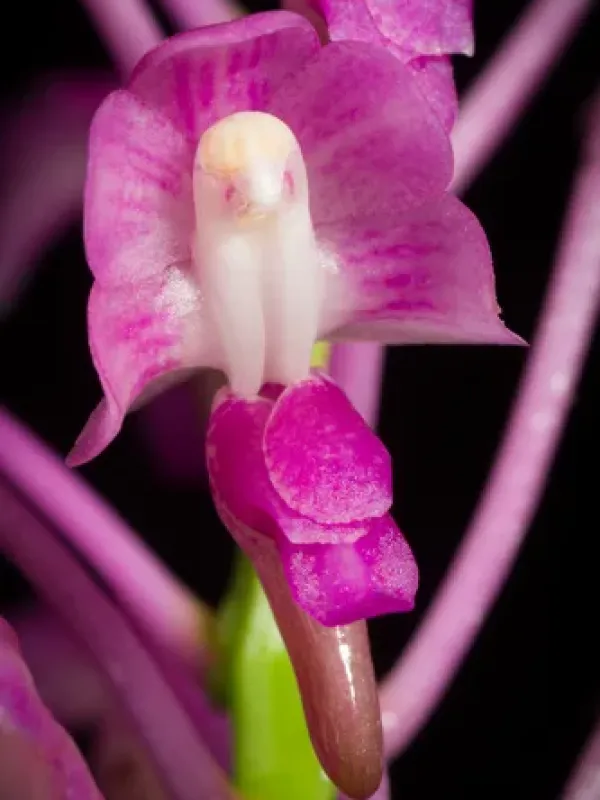
Description
Growing requirements
Aerides leeana is an epiphytic orchid species belonging to the Orchidaceae family. Native to the tropical forests of the Philippines, this plant grows on tree trunks and branches, where it thrives in warm, humid conditions throughout the year.
To successfully cultivate this species, it is essential to replicate its natural environment. The plant requires bright, filtered light; direct sun exposure should be avoided to prevent leaf scorch. The ideal temperature range is between 20°C and 28°C.
The substrate for planting must be highly breathable. A mixture consisting of pine bark, charcoal, and sphagnum moss is recommended to facilitate proper aeration for the root system, which is critical for epiphytic health.
High relative humidity, typically between 70% and 80%, is mandatory for optimal growth. In controlled environments such as greenhouses, misting systems or ultrasonic humidifiers are commonly employed to maintain these levels.
Watering practices should focus on the "soak and dry" method. It is vital to ensure that the medium dries out slightly between waterings to prevent the development of root rot caused by stagnant moisture.
Main diseases and pests
The primary threats to Aerides leeana involve fungal diseases, which are usually triggered by excessive humidity combined with poor air circulation. Root and stem rots are the most destructive conditions for this species.
Insect pests including spider mites, scale insects, and mealybugs frequently attack the plant. These pests thrive in dry air and stagnant conditions, extracting vital nutrients and weakening the plant's structural integrity.
Effective pest management involves regular visual inspections of the leaf axils and the undersides of the leaves. Using systemic insecticides and acaricides can help manage infestations before they spread to other specimens.
Bacterial spots, appearing as water-soaked lesions on the foliage, require immediate sanitation. Infected tissue must be removed using sterile cutting tools, followed by the application of antiseptic or fungicidal agents.
Ensuring constant but gentle airflow is the best preventative measure against most pathogens. Proper hygiene in the growing space significantly reduces the risk of pest outbreaks and fungal proliferation.