
Aerides falcatum
Aerides falcatum
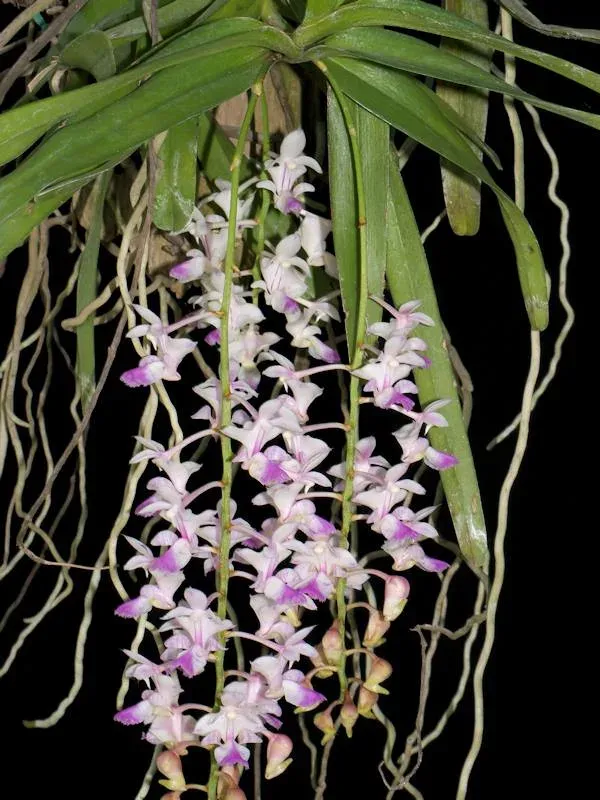
Description
Growing requirements
Aerides falcatum is a stunning tropical epiphytic orchid belonging to the Orchidaceae family. Native to the forests of Southeast Asia, including Thailand, Laos, and Myanmar, this plant naturally thrives in high-humidity environments, growing on tree branches and absorbing moisture from the atmosphere.
The plant exhibits a monopodial growth habit with leathery, strap-shaped leaves that can display a distinct curved shape, giving the species its common name. In its prime condition, it develops pendulous inflorescences covered in fragrant, long-lasting flowers.
For optimal growth, it requires a humid environment with humidity levels maintained between 70% and 85%. Daytime temperatures should ideally hover between 24°C and 28°C, while a drop in temperature at night is essential to mimic its natural montane or lowland forest habitat.
Cultivation requires a highly porous medium, typically consisting of large-grade bark, charcoal, and perlite. Proper airflow around the root zone is critical to prevent suffocation, which is why basket culture or mounting on wooden slabs is often preferred over traditional pots.
Regarding light, this orchid performs best under bright, diffused light. Excessive direct sun exposure can cause significant leaf scorch, while insufficient light will hinder the plant's ability to produce flowers during its bloom cycle.
Main diseases and pests
Improper watering is the primary cause of decline in Aerides falcatum. Constant moisture retention in the growing medium inevitably leads to root rot, which can quickly spread to the main stem and kill the entire specimen if not addressed promptly.
Pests such as mealybugs and scale insects represent significant threats to this orchid. They tend to congregate in the leaf axils, making them difficult to detect early, which necessitates regular visual inspections and preventive pest management.
Fungal pathogens often invade the plant tissues during periods of poor ventilation and high humidity. These infections frequently manifest as irregular dark spots, requiring the removal of the affected area and the application of appropriate antifungal treatments.
Spider mites are common in dry conditions, frequently damaging the leaf surface by extracting sap and causing a mottled, yellow appearance. Maintaining adequate humidity levels is the best defense against these microscopic pests.
The use of mineral-heavy or chlorinated water can lead to root toxicity over time. It is highly recommended to use filtered or rainwater for irrigation to ensure the long-term vitality of the root system.