
Aerides crispa
Aerides crispa
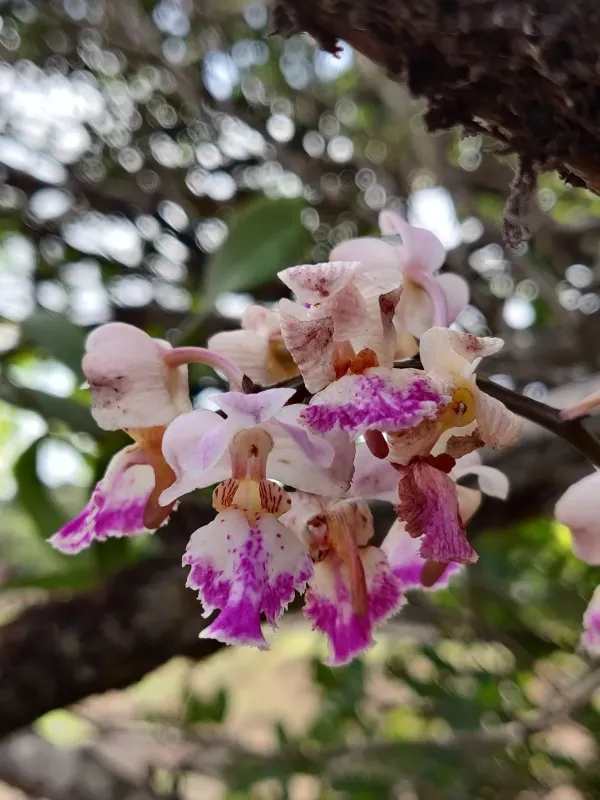
Description
Growing requirements
Aerides crispa is a distinctive orchid species belonging to the Orchidaceae family, native to the tropical forests of India and Sri Lanka. This epiphyte is characterized by its long, leathery leaves and impressive, pendulous inflorescences that appear during the flowering season.
The cultural requirements for this plant focus on high humidity levels and excellent ventilation. It thrives in an environment where temperatures remain stable, typically between 20 and 26 degrees Celsius during the day, with a cooler night phase.
Bright, indirect light is essential for optimal growth and bloom production. Exposure to harsh, direct sunlight must be avoided, as it can cause significant leaf scorch, whereas insufficient light will prevent the plant from flowering.
Aerides crispa requires a specialized growing medium that allows for fast drainage. Most growers use coarse bark, charcoal, and perlite in a well-ventilated pot or a wooden basket to mimic the natural tree-dwelling habit of the species.
Watering should be frequent but mindful of the plant's need to dry out slightly between cycles. During the active growing season, high-quality orchid fertilizer should be applied at a diluted concentration to support healthy foliage and root development.
Main diseases and pests
Pests such as scale insects and spider mites are the most common threats to Aerides crispa, especially when ambient humidity is too low. Early identification and manual cleaning can often mitigate the need for harsh chemical treatments.
Fungal rots are significant concerns, often caused by stagnant water trapped in the crown of the plant. Ensuring that the foliage dries quickly after watering is a critical step in preventing crown rot and leaf spot diseases.
Root rot, frequently induced by poor drainage or over-fertilization, can weaken the plant and make it susceptible to opportunistic infections. Proper substrate management and regular repotting are essential for long-term health.
Viruses can affect the plant, manifesting as stunted growth or distorted leaves, though this is less common with proper hygiene. Using sterilized cutting tools is a mandatory practice for all maintenance operations to prevent the transmission of pathogens.
Environmental stress, such as exposure to cold drafts or improper air circulation, can lead to premature flower drop. Maintaining a consistent microclimate is the most effective way to ensure a successful bloom cycle and maintain plant vigor.