
Velvetleaf
Abutilon theophrasti Medik.
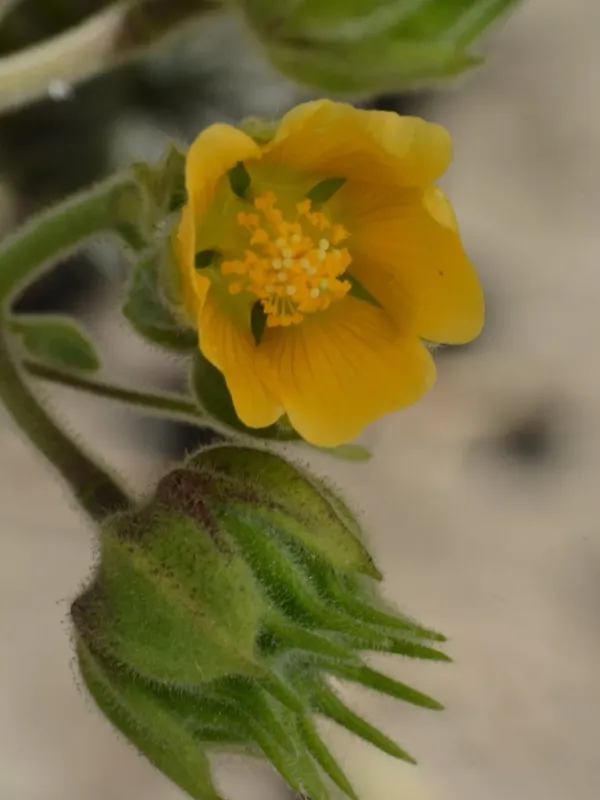
Description
Sowing dates
Velvetleaf (Abutilon theophrasti) is an annual plant belonging to the Malvaceae family. Historically, it was grown as a fiber crop, similar to jute or hemp, due to the strength of its stem fibers. Planting typically begins when soil temperatures consistently reach at least 12–15 degrees Celsius in the spring.
Seeds of this plant have remarkable longevity, capable of remaining dormant in the soil for several decades. Proper sowing depth is critical, usually ranging from 2 to 4 centimeters, to ensure uniform germination and early establishment.
The plant exhibits high seedling vigor, allowing it to grow rapidly and outcompete many surrounding plant species. When grown for commercial purposes, plant density is adjusted to maximize the length and quality of the stems.
In modern agricultural contexts, velvetleaf is more commonly recognized as a problematic weed. Its rapid growth rate requires farmers to implement effective weed management strategies, including early mechanical cultivation or targeted herbicide application.
Despite its reputation as a weed, its biological efficiency is impressive, as it quickly forms a dense canopy that shades the ground, altering the microclimate within the field.
Growing requirements
Velvetleaf prefers fertile, well-drained loamy or black soils. It is highly adaptable to various soil types but thrives best in neutral to slightly alkaline pH environments. It is a warm-season plant that requires significant sunlight and heat for optimal development.
The plant is noted for its drought tolerance, primarily due to its deep taproot system, which can access moisture from lower soil profiles. However, it is sensitive to waterlogged conditions, which can inhibit its growth and lead to stem rot.
In its natural habitat, it spans diverse temperate and subtropical regions. Its invasive nature is supported by its ability to withstand a range of climatic variables, making it highly competitive in disturbed ecosystems.
Field management requires careful attention to soil aeration. Since the plant is intolerant of long-term soil saturation, adequate drainage is necessary to maintain the plant's health and prevent fungal diseases.
Competitive success is dictated by early-season growth. If shaded by other crops, velvetleaf development is stunted, which is why it is often successfully managed through dense planting of competing agricultural crops.
Yield
The biomass yield of velvetleaf can be substantial, as the plant can grow up to 2.5 meters in height under ideal conditions. Its stem biomass was historically valued for the production of sturdy ropes, twine, and burlap-like materials.
The fiber content represents a significant portion of the dry stem weight. While less common today, the plant's potential for producing eco-friendly, biodegradable industrial fibers remains a subject of niche interest.
Seed production is one of the plant's most prolific biological features. A single, well-developed plant can produce thousands of seeds, contributing to its rapid expansion in agricultural and waste areas.
When cultivated as a green manure crop, velvetleaf contributes to soil health by adding significant organic matter. Its extensive root system also improves soil structure by physically breaking up compacted layers.
Total dry matter yields can reach impressive levels per hectare. However, the economic impact is often negative due to the costs associated with its management when it appears as a weed in traditional grain or row crops.
Main diseases and pests
Velvetleaf is generally resistant to many common pests due to the presence of secondary metabolites in its leaves, which serve as natural chemical defenses. This inherent resistance makes it a highly resilient species.
Fungal diseases, including powdery mildew and rust, can occur under high humidity or poor ventilation. These diseases may reduce the overall quality of the stems and influence the viability of the plant.
Root rot is a potential threat when the plant is grown in poorly drained soils. Excessive water accumulation around the crown can lead to rapid decline and necrosis of the lower stem tissues.
As a significant weed, velvetleaf poses a threat to biodiversity and agricultural productivity by competing for water, nutrients, and light. It is often a target of integrated pest management programs.
Control is challenging because the seeds germinate in flushes throughout the growing season. Consequently, multiple control interventions are often necessary to effectively reduce the weed seed bank in a field.
Harvesting
For fiber extraction, the harvest is ideally timed during the flowering stage. At this developmental point, the stems are at their peak for fiber elasticity and quality, facilitating easier mechanical processing and stripping.
Seed harvesting must be carried out when the capsules are fully mature and dark. Great care is needed during the process, as the seed pods are prone to shattering, which can lead to significant seed loss if handled improperly.
Harvested material is typically bundled and dried in the field to reach an appropriate moisture content. This drying phase is crucial to prevent the deterioration of the fibers during storage before final processing.
Post-harvest management involves the incorporation of remaining stalks into the soil. Due to the high carbon-to-nitrogen ratio of mature stems, heavy discing is recommended to ensure proper breakdown and prevent interference with future tillage.
In cases of infestation, harvest equipment must be thoroughly cleaned to prevent the transportation of dormant seeds between fields. This is a standard biosecurity measure to limit the spread of this aggressive species.