
Abutilon pictum
Abutilon pictum (Gillies ex Hook. & Arn.) Walp.
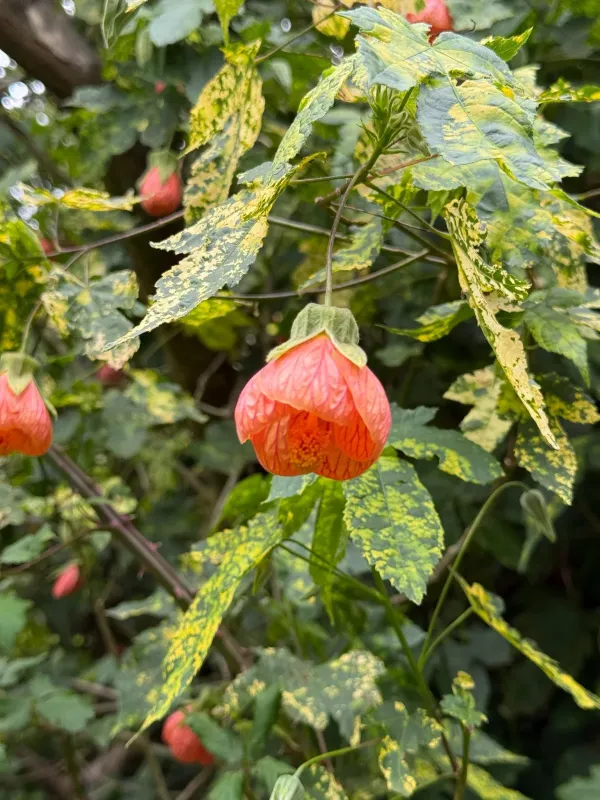
Description
Sowing dates
Propagation of Abutilon pictum is primarily achieved through seeds or stem cuttings during the spring season, from March to April.
Seeds should be sown in a light, well-draining substrate at a depth of approximately 0.5 centimeters, maintaining a temperature of 20–22 degrees Celsius.
Using small greenhouses or plastic covers helps maintain the humidity levels necessary for successful germination and early seedling development.
Stem cuttings, approximately 10–15 centimeters long, are often preferred to ensure the plant retains its variegated leaf characteristics perfectly.
Once true leaves appear, seedlings are transplanted into individual pots and gradually acclimated to typical ambient conditions.
Growing requirements
Abutilon pictum belongs to the Malvaceae family and is native to the tropical and subtropical regions of South America, particularly Brazil.
The plant requires bright, indirect light to maintain its vibrant leaf variegation and to ensure prolific flowering throughout the season.
Soil should be fertile, loose, and slightly acidic or neutral in pH; a mixture of loam, peat, and sand provides an ideal growing medium.
Consistent watering is essential during the active growing season, though the soil should never become waterlogged to avoid root rot.
Regular fertilization with a balanced mineral supplement every two weeks during the spring and summer supports vigorous growth and health.
Main diseases and pests
Common pests affecting this culture include spider mites and whiteflies, which thrive in low-humidity environments often found indoors.
Aphids can cause significant damage to the plant by feeding on tender new growth, leading to deformation of the foliage.
Root rot is a major threat, usually triggered by excessive moisture combined with cool temperatures, which hampers root respiration.
- Prevention: Maintain adequate air circulation and moderate humidity.
- Control: Utilize appropriate insecticides to manage pest outbreaks immediately.
- Sanitation: Regularly remove dead or dying foliage to prevent the spread of fungal diseases.
Fungal infections such as powdery mildew can be managed by using copper-based fungicides and ensuring adequate spacing between plants.