
Zornia glochidiata
Zornia glochidiata
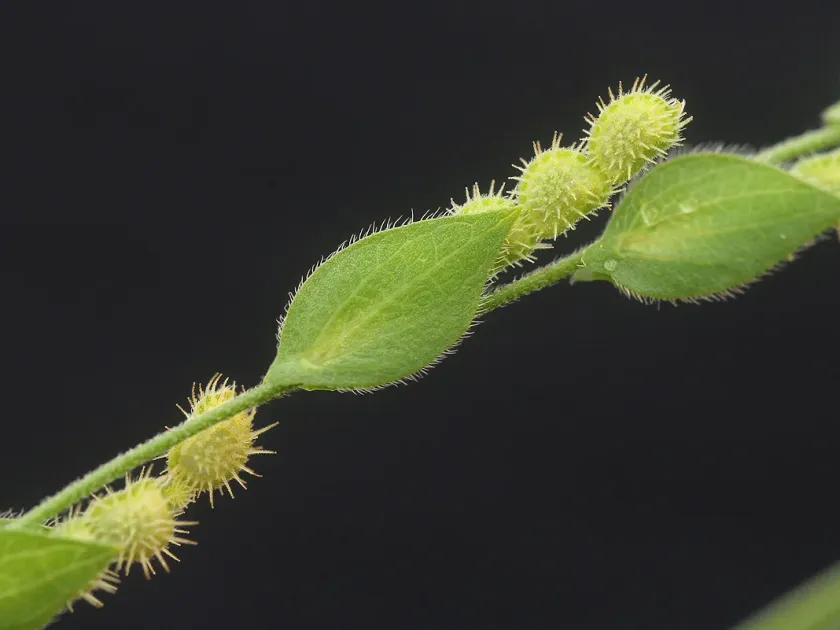
Description
Sowing dates
Zornia glochidiata is a tropical legume primarily cultivated in regions with distinct wet and dry seasons. Sowing typically coincides with the onset of the first seasonal rains to ensure sufficient moisture for germination.
Seeds are broadcast onto prepared seedbeds or directly into minimally tilled soil. Due to their small size, they require minimal soil cover, and their excellent self-seeding capability often aids in pasture regeneration.
Timing is crucial; sowing too early before stable rainfall can lead to seedling mortality during dry spells. Farmers usually wait for the ground to be thoroughly moistened before initiating the planting process.
The seeding density is adapted based on the desired use, whether for rotational grazing or hay production. A uniform distribution helps in creating a robust canopy that suppresses unwanted weeds.
In traditional agricultural systems, this plant is valued for its ability to integrate into local cropping cycles without requiring intensive field preparation or complex machinery.
Growing requirements
Belonging to the Fabaceae family, Zornia glochidiata is highly valued for its adaptability to marginal, nutrient-poor sandy soils. It thrives in environments where other high-input crops struggle.
The plant requires full sun exposure and well-drained soil. It is intolerant to waterlogging, so site selection should avoid low-lying areas where water might collect after heavy rains.
Drought tolerance is one of its most significant traits, attributed to its deep taproot system. This makes it a critical species for desertification control and landscape restoration in arid areas.
It acts as a nitrogen fixer, contributing to soil enrichment. This biological process reduces the need for nitrogenous fertilizers, making the plant an environmentally friendly choice for sustainable farming.
No special climatic conditions are required beyond the basic tropical temperature range. Its ability to withstand high temperatures makes it reliable for forage production in tropical heat.
Yield
The yield of Zornia glochidiata is highly reliable even under erratic rainfall patterns. It produces a substantial amount of biomass that is rich in proteins, making it an excellent feed source.
Typical yields range from 1 to 3 tonnes of dry matter per hectare depending on the soil fertility and seasonal rainfall. It serves as a staple component in high-quality hay mixtures for small ruminants.
Nutritional value is highest during the flowering phase. Regular grazing can stimulate vegetative growth, allowing for multiple harvests or continuous grazing support throughout the rainy season.
The crop's productivity is essential for livestock farmers in dry regions, as it provides nutritious fodder when other pasture grasses might become dormant or lose their nutritional density.
Proper management of the stocking rate is vital to maximize yield. Overgrazing can reduce the plant's long-term productivity, whereas controlled grazing promotes healthier root development and denser stands.
Main diseases and pests
Fungal diseases related to high humidity are the primary biological threats to this crop. In periods of excessive moisture, leaf spotting and stem rot can occur, which compromises the feed quality.
Insect pests, including various beetles that target foliage or ripening seeds, can cause economic damage. Integrated pest management, focusing on crop rotation, is usually sufficient to mitigate these risks.
Weed competition during the early establishment phase is a potential threat. If weeds are not controlled, they may outcompete the young seedlings for light and soil nutrients, leading to patchy stands.
Overgrazing poses an indirect threat by compacting the soil and preventing seed bank replenishment. Maintaining a balanced grazing schedule is key to preserving the longevity of a Zornia pasture.
Monitoring the field for signs of nutrient deficiencies or abnormal discoloration is recommended. Although the plant is hardy, early detection of issues allows for effective localized management.
Harvesting
Harvesting for hay should occur when the plants are in full bloom. This stage provides the optimal balance between high protein content and the total mass available for livestock consumption.
The forage is mowed and sun-dried in the field. Turning the windrows periodically ensures even moisture loss, which is critical for preventing mold formation during storage in bale form.
Seed harvesting requires careful timing to ensure the pods are mature but not yet shattering. Once dried, seeds should be cleaned and stored in cool, dry conditions to maintain high viability for the next season.
Mechanical harvesting is straightforward using standard mowing equipment. Because the plant is relatively low to the ground, the cutting height should be adjusted to avoid excessive soil inclusion.
Successful storage of the harvested forage allows farmers to maintain a buffer of high-quality feed for the dry season, significantly improving the survival rates and weight gain of livestock.