
Xanthosoma violaceum
Xanthosoma violaceum
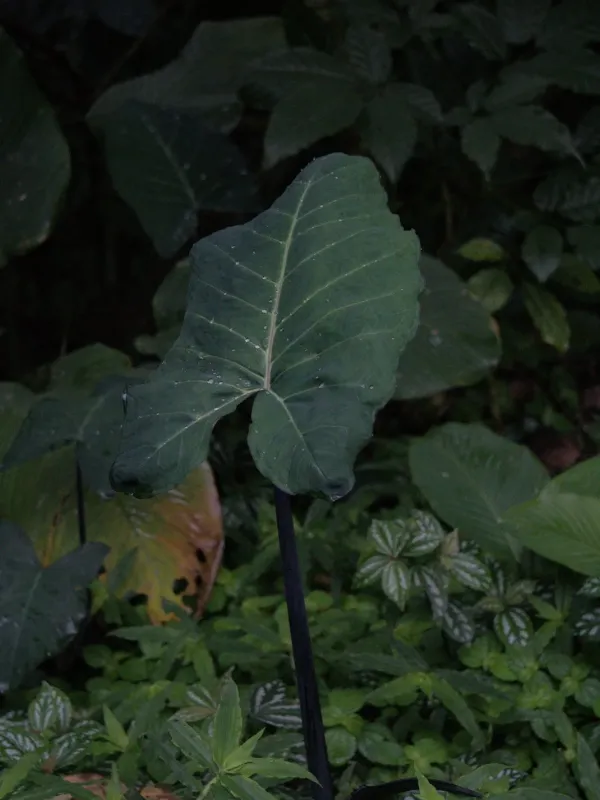
Description
Sowing dates
Xanthosoma violaceum, commonly known as blue taro, is a perennial herbaceous plant belonging to the Araceae family, highly valued for its edible corms.
The crop is propagated vegetatively, utilizing side tubers or rhizome segments, which ensures the preservation of specific varietal traits in the offspring.
Planting is typically performed at the onset of the rainy season to capitalize on moisture availability, which is essential for rapid root system establishment.
The spacing between plants usually ranges from 60 to 90 cm to allow for the robust development of the foliage and the underground tubers beneath the soil surface.
The growth cycle is relatively long, often requiring 9 to 12 months for the plant to mature fully and reach the stage where the corms are ready for harvest.
Growing requirements
The plant thrives in humid tropical climates, requiring consistent rainfall or irrigation to maintain soil moisture levels throughout the entire vegetative period.
Well-drained, fertile, deep loamy soils with a slightly acidic to neutral pH are ideal for ensuring healthy growth and optimal tuber weight and quality.
Waterlogging must be strictly avoided, as excess moisture in the soil can lead to the decay of the root system and promote fungal diseases in the corms.
Xanthosoma prefers temperatures between 25 and 30 degrees Celsius; it is highly sensitive to cold weather and cannot withstand frost or chilly temperatures.
While the plant can tolerate partial shade, it requires adequate sunlight to maximize photosynthesis, which is critical for the production of starch in the tubers.
Yield
The economic value of this crop lies in its starchy corms, which serve as a primary dietary staple for millions of people in tropical regions around the globe.
The tubers provide an excellent source of complex carbohydrates, dietary fiber, and various vitamins, supporting nutritional security in local populations.
The young leaves and petioles are frequently consumed as cooked greens, provided they are prepared correctly to eliminate crystalline calcium oxalate.
Beyond human consumption, the plant can be processed into high-quality starch for use in the food manufacturing and textile industries as a thickening agent.
Small-scale farmers often benefit from the reliability of the crop, as it offers a consistent food supply with minimal input requirements in suitable climates.
Main diseases and pests
Fungal diseases, such as root rot and leaf spot, are the primary biological threats to the crop, especially under conditions of high humidity and poor soil drainage.
Pests such as nematodes and various leaf-eating insects pose significant challenges, often necessitating integrated pest management strategies to protect the yield.
Effective crop management includes the use of disease-free planting material and rigorous field sanitation to prevent the spread of pathogens between seasons.
Regular monitoring of the foliage and soil condition allows for early intervention, reducing the need for intensive chemical applications and costs.
Crop rotation and intercropping are recommended practices to break the disease cycle and improve the overall soil health of the agricultural site.
Harvesting
Harvesting occurs when the foliage begins to turn yellow and wither, indicating that the plant has ceased active growth and maximized its carbohydrate storage.
The corms are carefully lifted from the soil to avoid wounding, as any physical damage to the skin significantly increases susceptibility to storage pathogens.
Post-harvest handling involves removing soil debris, curing in a shaded and well-ventilated area, and sorting the tubers based on size and quality standards.
Storage requires cool, dry, and airy environments to extend the shelf life of the tubers and prevent excessive respiration or decay during the distribution process.
Proper packaging, typically in breathable crates, is essential for maintaining the quality of the produce during transit to domestic or international markets.