
Xanthosoma bayo
Xanthosoma bayo
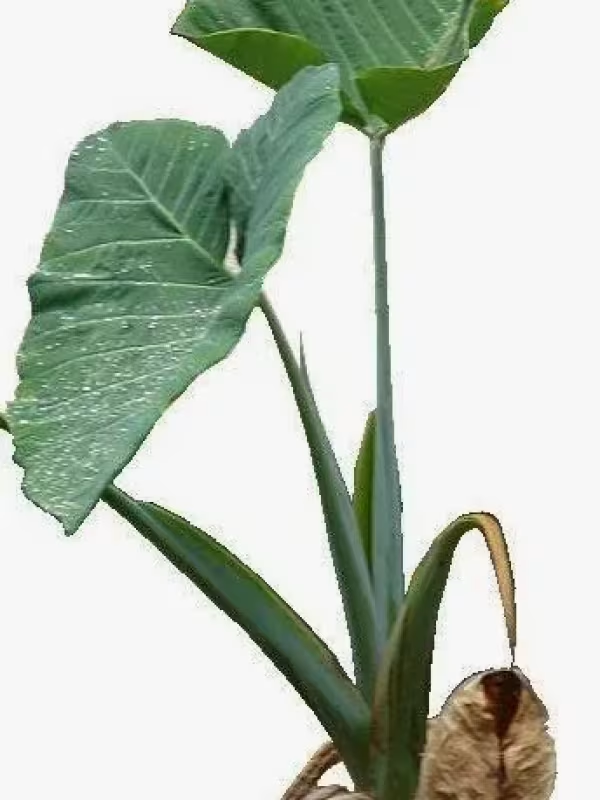
Description
Sowing dates
Xanthosoma bayo is a perennial herbaceous plant belonging to the Araceae family. It is a significant crop in tropical agriculture, prized primarily for its starchy corms and edible leaves.
The propagation of the crop is typically vegetative, using segments of the rhizome or daughter corms. Planting should ideally coincide with the onset of the rainy season to provide sufficient moisture for initial establishment.
Proper spacing is essential for maximum yield, typically ranging from 80 to 100 centimeters between plants. This distance allows for the full development of the plant's large, impressive foliage.
The growth cycle of Xanthosoma bayo is long, usually requiring between 9 and 12 months to reach full maturity. Planning the planting schedule according to local climate patterns is a key factor for success.
Selection of healthy mother stock is vital to avoid the transmission of viral diseases. Farmers should prioritize high-quality planting material to ensure uniform growth across the plantation.
Growing requirements
As a tropical species, Xanthosoma bayo thrives in warm and humid conditions. The optimal temperature range for growth is between 25°C and 30°C, and the plant is highly sensitive to frost.
The soil should be deep, well-drained, and rich in organic matter. A slightly acidic to neutral pH (5.5–6.5) is preferred for optimal nutrient availability and root development.
Consistent moisture is required throughout the growing season. While the plant loves water, stagnant conditions in the root zone must be avoided to prevent tubers from rotting.
Light levels should be carefully managed; the plant performs best under partial shade or filtered light. Intense direct sun can cause leaf scorching, particularly when humidity is low.
Regular application of balanced fertilizers, particularly those rich in potassium, encourages robust tuber formation. Mulching helps maintain soil moisture levels and reduces the competitive pressure from weeds.
Yield
The yield of Xanthosoma bayo is determined by the environmental conditions and the quality of agricultural practices employed. Under favorable management, the crop can provide high quantities of edible corms.
Each mature plant produces a cluster of tubers that contribute to the total harvest mass. Proper harvesting techniques ensure that these tubers remain intact for distribution and consumption.
Beyond the starchy tubers, the plant produces edible leaves and petioles that are valuable in local diets. This dual-use capability makes it a versatile crop for smallholder farmers.
Yield stability is achieved through consistent water management and effective pest control. Improving soil fertility through organic amendments often leads to a measurable increase in tuber volume.
Post-harvest handling is critical to ensure the yield reaches the market in good condition. Proper drying and ventilation are the cornerstones of successful storage.
Main diseases and pests
Fungal diseases, especially those causing root rot, are the primary threat to Xanthosoma crops. Excess soil moisture and poor drainage are the most common catalysts for these outbreaks.
Root-knot nematodes are significant pests that can severely reduce tuber quality and overall yield. Integrated pest management, including crop rotation, is essential for mitigation.
Pests like aphids and leaf-eating insects can weaken the plant's vigor. Regular monitoring allows farmers to apply biological controls before these populations reach economic thresholds.
Bacterial soft rots are a major concern during storage. Ensuring that tubers are dry and stored in well-ventilated areas can drastically reduce post-harvest losses.
- Fusarium wilt
- Root-knot nematodes
- Bacterial soft rot
- Spider mites
- Aphids
Harvesting
Harvesting usually begins when the plant's foliage starts to yellow and dry out, signaling that the plant has completed its cycle and channeled nutrients into the tubers.
Careful digging is required to lift the tubers from the ground without causing bruising or cuts. Damaged tubers are highly susceptible to secondary infections and decay.
After removal, tubers should be cleared of excess soil and left to cure in a shaded, airy spot for a few days. This process helps seal minor wounds and improves storage longevity.
For long-term storage, a cool, dark, and dry environment with active ventilation is required. These conditions prevent the accumulation of moisture and inhibit the development of molds.
Sorting should be performed immediately after harvest to separate high-quality tubers for sale from smaller or damaged ones that might be used for propagation or immediate local use.