
Xanthosoma caracu
Xanthosoma caracu
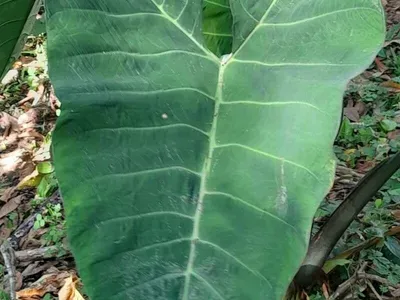
Description
Sowing dates
Xanthosoma caracu belongs to the Araceae family and is grown as a perennial herbaceous crop, often managed as an annual in agricultural systems. Propagation is strictly vegetative, utilizing segments of rhizomes or side suckers known as cormels.
In tropical climates, planting usually aligns with the onset of the rainy season to provide sufficient moisture for initial establishment. Optimal temperatures for sprouting and early growth range from 22 to 30 degrees Celsius.
Planting material should be allowed to heal or cure for a few days after cutting to prevent rot upon soil contact. Planting depth typically ranges from 10 to 15 centimeters depending on soil texture.
Spacing requirements are significant due to the plant's large foliage. A distance of 80 to 100 centimeters between plants is recommended to ensure adequate airflow and reduce the humidity levels that favor fungal growth.
While the plant thrives in full sun, it is known for its shade tolerance, making it an excellent candidate for agroforestry systems where it can be grown under the canopy of fruit trees.
Growing requirements
Xanthosoma caracu requires fertile, well-drained soils with a slightly acidic to neutral pH. Sandy loams are considered ideal for promoting good tuber development and easy harvesting.
Water management is critical; although the plant is moisture-loving, it is highly susceptible to waterlogging. Raised beds or proper drainage channels are essential to prevent root and rhizome rot in heavy soil types.
Wind protection is vital, as the large leaves act as sails and are prone to shredding in strong winds, which significantly reduces the photosynthetic area and overall vigor of the crop.
Organic fertilization, including the application of compost or well-rotted manure, is necessary to maintain nutrient availability, particularly potassium, which is essential for tuber formation.
Mulching is a standard practice that helps maintain soil moisture, suppresses weeds, and regulates temperature in the root zone, ultimately leading to higher yields and better tuber quality.
Yield
Yield capacity is dependent on a long, frost-free growing season and consistent maintenance. The crop produces large, starchy central rhizomes and smaller cormels, both of which are harvested for consumption.
The total growth cycle spans 9 to 12 months. Harvesting begins when the leaves turn yellow and start to wilt, signaling that the plant has ceased vegetative growth and translocated nutrients to the tubers.
Hilling up soil around the base of the plant during the growing season encourages the development of more cormels and prevents the exposure of the base of the stem to direct sun.
Under optimal management, yields can range from 20 to 30 metric tons per hectare. Post-harvest handling is critical to ensure the longevity of the crop and prevent loss to decay.
As a major source of starch, Xanthosoma caracu plays a vital role in local food security, and improving agronomic techniques is a priority for sustainable production in its cultivation regions.
Main diseases and pests
Fungal diseases, particularly root rots, are the most significant threat, often exacerbated by poor soil drainage. Using clean, disease-free planting material is the primary defense strategy.
Nematodes are known to cause damage to the root system, resulting in stunted growth and lower yields. Crop rotation and soil solarization are effective methods to manage these soil-borne pests.
Leaf-feeding insects and mites can become problematic during dry spells. Maintaining soil moisture and plant vigor is often sufficient to prevent serious outbreaks of these pests.
Viral infections can significantly impact crop vitality. Since these are often transmitted by sap-sucking insects, pest control and the removal of infected plants are essential to maintain plantation health.
Avoiding continuous monocropping on the same land is recommended to prevent the buildup of soil pathogens that specifically target Araceae crops, ensuring long-term field productivity.
Harvesting
Harvesting is performed manually or with light mechanical assistance after the foliage has died back. Care must be taken to minimize bruising or cutting the tubers, as these wounds provide entry points for pathogens.
Once harvested, tubers should be cleaned of excess soil and allowed to cure in a shaded, well-ventilated area for several days to harden the skin and improve storage shelf life.
Storage facilities should maintain cool, dry conditions with constant air circulation. Tubers are sensitive to cold and should never be exposed to freezing temperatures, which cause tissue breakdown.
Sorting tubers for the next planting season should be done immediately after harvest. Only healthy, robust rhizomes should be kept for propagation, ensuring high-quality start for the next crop cycle.
Culinary usage requires thorough cooking to neutralize calcium oxalate crystals present in the raw tissues, making the tubers a safe, nutritious, and versatile component of the diet.