
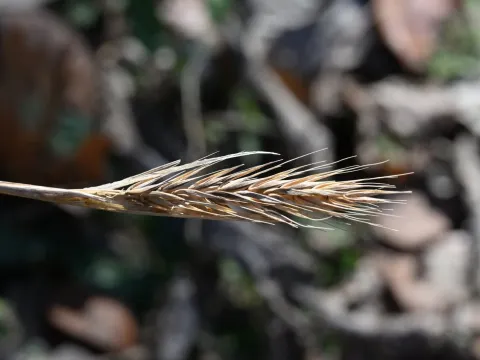
Hybrid wheatgrass
x Pseudelymus Barkworth & D. R. Dewey
Planting of hybrid wheatgrass is primarily conducted in early spring or late summer, when the soil has sufficient moisture levels to ensure seed germination. For temperate regions, the optimal period is April or the second half of August, allowing plants to establish strong root systems before the onset of extreme weather conditions.
What the section contains

Hybrid wheatgrass
The seeding depth depends on the soil texture, typically ranging between 2 and 3 centimeters. In sandy, lightweight soils, a slightly greater depth is recommended, whereas in heavy clay soils, the shallowest possible depth should be maintained to ensure uniform and rapid emergence.
Seeding rates are calculated based on the purity and germination percentage of the seed material, averaging between 12 and 16 kilograms per hectare when using standard row seeding methods. A crucial requirement for success is preparing a smooth, well-compacted seedbed to ensure even distribution of the seeds.
To establish long-term stands, it is common to plant wheatgrass either in pure stands or as part of multi-component forage mixtures with legumes. Integrating legumes not only enhances the nutritional profile of the fodder but also contributes to natural nitrogen fixation in the soil.
Post-seeding rolling is an essential practice to improve soil-to-seed contact, which is vital during periods of low spring precipitation. The use of certified, high-quality seeds ensures a dense stand from the very first year of vegetation, providing a strong foundation for long-term production.
Hybrid wheatgrass belongs to the Poaceae family and is recognized for its high ecological plasticity, allowing it to adapt to various soil and climatic conditions. The crop is characterized by superior winter hardiness and the ability to withstand extended drought periods without significant declines in overall productivity.
The plant thrives in well-drained chernozem and chestnut soils but can also perform well in loamy areas with a neutral to slightly alkaline pH. A key requirement for successful development is the absence of stagnant groundwater, as excessive soil moisture can severely inhibit root system growth.
For optimal growth, wheatgrass requires moderate light exposure; the crop performs poorly under intense shading from other plant species. Given proper agronomic management, wheatgrass can maintain high stand density in a single location for 7 to 10 years without losing its nutritional value.
The primary maintenance requirement involves the application of mineral fertilizers, particularly nitrogen, which stimulates vigorous green mass growth during the spring regrowth phase. Phosphorus and potassium fertilizers are best applied in the autumn to enhance the plant's overall resistance to winter stress factors.
- Optimal pH range: 6.0–7.5
- Minimum germination temperature: +3...+5°C
- Salinity tolerance: moderate
- Nitrogen requirements: high during tillering phase
- Root system type: fibrous, dense sod-forming
The green mass yield of hybrid wheatgrass depends largely on soil fertility levels and moisture regimes, averaging 15 to 25 tons per hectare per season. Under irrigation or favorable weather conditions, these yields can be significantly higher.
The dry matter yield upon two cuttings ranges from 5 to 8 tons per hectare. Maximum productivity is typically observed during the second and third years of the crop's lifecycle, once the root system has fully explored the arable horizon and is efficiently accessing available nutrients.
Commercial use of this crop is primarily focused on hay and pasture production, as the forage is highly palatable to livestock. The green mass of wheatgrass contains high levels of protein and carotene, making it a valuable component in animal nutrition programs.
To achieve the maximum harvest of nutrients, mowing should be conducted at the beginning of the heading phase. Delayed harvesting leads to a decrease in feed quality due to the accumulation of crude fiber and a significant loss of total protein content within the dry mass.
Beyond its use as a fodder crop, wheatgrass is widely employed for phytoremediation and the stabilization of eroded soils. Its powerful, extensive root system effectively binds the soil, preventing water and wind erosion on sloped agricultural lands.
Major fungal diseases affecting hybrid wheatgrass include rust and powdery mildew, which impact leaves and stems during periods of high humidity. Proactive prevention, including strict adherence to crop rotation cycles, is essential to minimize the risk of widespread disease outbreaks.
Pests such as cereal flies and ground beetles can cause substantial damage to stands during the jointing phase. Monitoring pest populations and applying insecticides only when economic thresholds are exceeded represent the most effective and sustainable protection strategies.
Particular attention must be paid to weed control during the first year of the crop's establishment, as the slow early growth of wheatgrass makes it vulnerable to competition. Selective herbicides may be used only after the plants have developed a sufficient leaf surface area.
Improper grazing management can lead to stand thinning and the replacement of cultivated grasses with less valuable wild species. A rotational grazing system helps maintain stand density and preserves the intended species composition over the long term.
Abiotic factors, such as ice crusting, can also cause winterkill if temperatures fluctuate sharply at the end of the winter season. Agronomic practices like snow retention can help mitigate the effects of such weather anomalies on the crop's survival.
Harvesting wheatgrass for hay is performed during the full heading phase, ensuring the highest nutritional value for livestock. Timely mowing encourages rapid regrowth, which is vital for achieving a second high-yield cut within the same season.
After mowing, the material is left in windrows until moisture levels drop to 15–17%, which prevents mold development and the loss of nutrients during storage. The use of modern forage harvesting equipment minimizes leaf loss, preserving the plant's essential vitamin content.
For silage production, harvesting parameters are adjusted for moisture levels, which should remain between 50–55%. Thorough compaction of the material in silos or wrapped bales ensures the correct lactic acid fermentation process, preserving the feed for future use.
If the goal is seed production, harvesting is carried out via direct or split combining once the seeds reach full wax maturity. It is critical to avoid seed shattering, as wheatgrass seeds can be easily lost if harvesting operations are delayed.
Post-harvest seed processing includes cleaning through separators and drying to a standard moisture level of no more than 13%. Storing seed stock in dry, well-ventilated areas with pest protection ensures high viability and planting quality for the following season.