
Couch grass
Elymus repens x Pseudoroegneria spicata
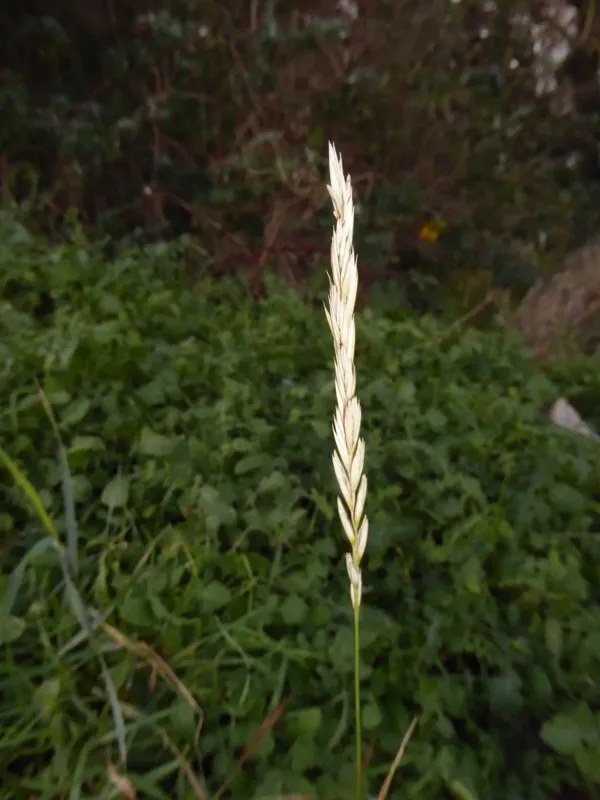
Description
Sowing dates
Couch grass, known scientifically as Elymus repens, belongs to the Poaceae family. It is a perennial grass that propagates mainly through an extensive network of rhizomes, although seeding is also possible for establishment.
When sowing via seeds, the process is best carried out in early spring or autumn. Seeds should be planted at a shallow depth of approximately 2 to 4 centimeters to ensure adequate germination rates.
Vegetative propagation involves utilizing rhizome segments. These segments are planted in furrows, providing a rapid way to establish a thick, uniform stand in fields designated for forage production.
The seeding rate varies based on seed purity but generally requires 10 to 15 kilograms per hectare. Proper soil preparation and compaction after sowing are essential for consistent moisture retention.
Young plants require minimal maintenance after establishment, as the grass is highly competitive and vigorous, quickly spreading across the designated cultivation area.
Growing requirements
Couch grass is renowned for its environmental adaptability, thriving in various climates ranging from cool temperate zones to more arid regions. It shows remarkable resistance to winter frost.
The plant is not highly demanding regarding soil quality, growing successfully in clay, loam, and even compacted soils. It displays a high tolerance for varying pH levels and moderate soil salinity.
Adequate soil moisture during the initial growth phase significantly promotes the development of the rhizome system. Once established, the root system can access water at deeper soil horizons, providing drought tolerance.
The species is well-suited for floodplains, as it can tolerate temporary waterlogging better than many other forage grasses. This makes it a reliable option for low-lying agricultural areas.
To maximize biomass production, the application of nitrogen-based fertilizers is recommended. The plant responds rapidly to nutrients, significantly increasing both height and leaf density.
Yield
As a forage crop, couch grass can yield substantial amounts of green matter, typically ranging from 15 to 25 tons per hectare depending on management intensity and fertility levels.
It provides high-quality nutrition, particularly when harvested during the booting stage. At this maturity level, the protein content and fiber balance are ideal for cattle feed.
The grass is known for its excellent regrowth capabilities. It often allows for two, and sometimes three, cuts per growing season, with the regrowth providing a vital source of late-summer fodder.
To maintain long-term productivity, farmers should employ periodic harrowing. This technique helps rejuvenate the sod by stimulating new growth from the rhizome network.
Integrating couch grass into crop rotations helps build soil structure. The extensive root system prevents erosion and improves organic matter content within the topsoil layer.
Main diseases and pests
Despite its robustness, couch grass is susceptible to common grass diseases, especially under conditions of high humidity and poor ventilation. Fungal infections are the most frequent concern.
Insects like the Hessian fly and the frit fly can pose threats by damaging the central stems, leading to stunted growth and reduced overall biomass yield for the forage season.
Effective management includes maintaining appropriate spacing between plants and avoiding over-fertilization, which can make the tissue more attractive to certain pests and pathogens.
If disease prevalence is high, early harvesting of the affected area can prevent the spread of spores and mitigate the impact on the overall quality of the forage.
- Rust (Puccinia spp.)
- Powdery mildew (Erysiphe graminis)
- Frit fly (Oscinella frit)
- Hessian fly (Mayetiola destructor)
Harvesting
The optimal harvest window is during the early heading stage. Harvesting at this time ensures the best balance between volume and nutrient density for livestock requirements.
For high-quality hay production, the grass is cut and windrowed. Frequent turning is necessary to ensure uniform drying and to prevent the development of mold within the layers.
Seed harvesting should be timed carefully as the seed heads turn golden yellow. Using modern combine harvesters with low settings helps prevent the loss of seeds due to their natural fragility.
Once dried to a moisture content of approximately 14%, the hay should be stored in dry, well-ventilated barns to maintain its nutritional value through the winter months.
After the final cut, the fields can be utilized as supplemental grazing land, allowing livestock to harvest remaining regrowth, which supports efficient farm land utilization.