
Weingartia mentosa
Weingartia mentosa
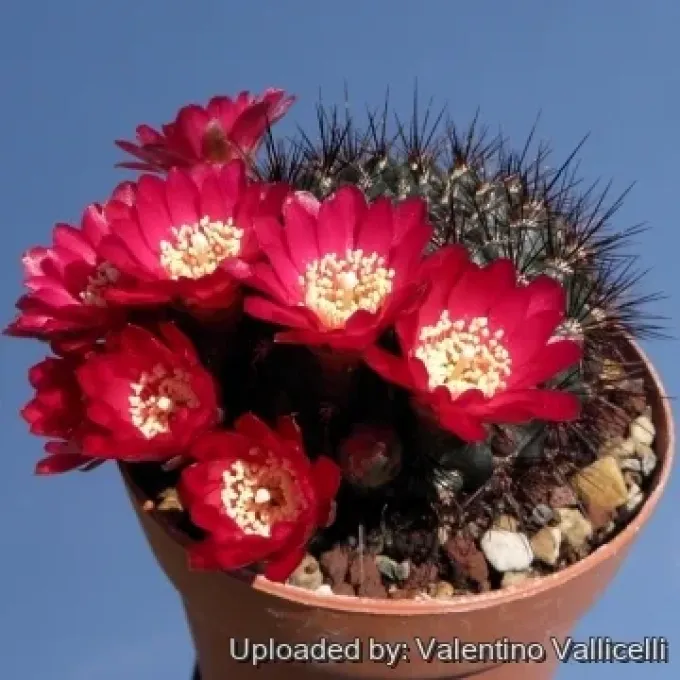
Description
Growing requirements
Weingartia mentosa is a resilient succulent plant belonging to the Cactaceae family. This species originates from the mountainous regions of Bolivia, where it has evolved to thrive in high-altitude rocky environments with limited water availability.
The plant is characterized by a spherical or slightly depressed stem with distinct ribs and a dense covering of spines. It is highly valued in horticulture for its compact growth habit and vibrant aesthetic, making it an excellent candidate for specialized pot culture.
Regarding climatic requirements, this cactus demands intense sunlight to maintain its natural shape and promote healthy growth. Exposure to full sun is ideal during the growing season, provided that the plant is gradually acclimatized to avoid epidermal scorching.
The soil for cultivation must be exceptionally well-draining. A mix consisting primarily of coarse sand, perlite, and small gravel, with a minimal fraction of organic loam, ensures that roots do not remain damp for extended periods, which is critical for health.
Watering should be performed only when the substrate is completely desiccated. During the winter dormancy period, the plant requires cool temperatures and essentially no water, allowing it to transition into a state of metabolic rest.
Main diseases and pests
The most significant threat to Weingartia mentosa is root and collar rot caused by overwatering or poor drainage. Excess moisture in the soil creates an anaerobic environment that rapidly compromises the integrity of the root system.
Pests such as spider mites are a common issue, particularly in dry and stagnant air conditions. These arachnids can cause significant structural damage and scarring to the epidermis if not controlled through appropriate application of miticides.
Root mealybugs can also infest the underground parts of the plant, often going unnoticed until the growth slows down significantly. Regular inspection of the root ball during repotting is essential for early detection.
To mitigate disease risks, ensure proper ventilation in the growing area. Adequate airflow helps dissipate excess humidity around the plant, preventing the onset of opportunistic fungal pathogens that thrive in still, humid air.
If rot is detected, it is recommended to perform a clean excision of the affected tissue, treat the wound with a fungicide or sulfur powder, and allow the plant to callus thoroughly before replanting it in fresh, dry soil.