
Weingartia canigueralii
Weingartia canigueralii
Description
Sowing dates
Propagation of Weingartia canigueralii is primarily achieved through seeds, as this species rarely produces basal offsets suitable for vegetative propagation.
Sowing should be initiated in early spring to take advantage of increasing daylight hours, which are critical for the successful development of seedlings.
Seeds are sown in a well-draining, sterile mineral-based substrate, kept under controlled moisture levels until germination occurs after a few weeks.
The optimal temperature range for germination is between 22 and 25 degrees Celsius, ensuring that the container is placed in a bright but sheltered location.
Young seedlings should be transplanted into individual pots only when they are robust enough to withstand the stress of handling, typically after one year.
Growing requirements
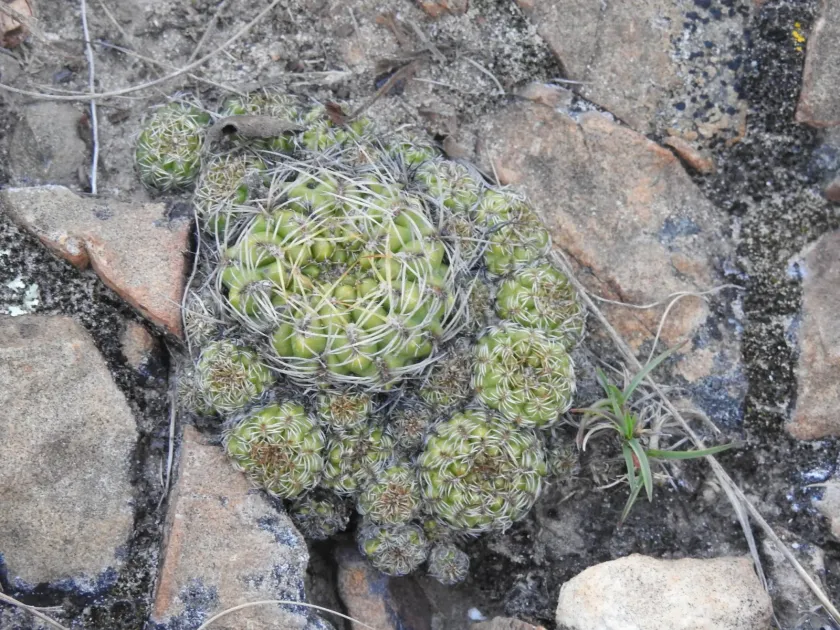
Weingartia canigueralii belongs to the Cactaceae family and is native to the high-altitude landscapes of Bolivia, where it thrives in rocky terrain.
This species requires high light intensity; partial shade can lead to etiolation, where the plant stretches and loses its compact, natural appearance.
A porous growing medium is essential, typically consisting of pumice, lava rock, and coarse sand, providing excellent drainage to prevent root damage.
During the growing season, watering should be thorough but infrequent, allowing the substrate to dry out completely before the next irrigation cycle.
A cool winter dormancy period is essential for this species to stimulate flower production, ideally kept between 5 and 10 degrees Celsius with no water.
Main diseases and pests
Root rot remains the most significant threat to Weingartia canigueralii, almost always resulting from poor drainage or excessive soil moisture levels.
Spider mites are common pests that thrive in dry, warm environments, often causing microscopic scarring on the cactus epidermis which can disfigure the plant.
Root mealybugs can pose a hidden challenge by colonizing the root system, which leads to stunted growth and a general decline in the health of the plant.
To mitigate these risks, it is recommended to maintain good air circulation around the plants and perform regular inspections during the active growing months.
If an infestation or infection is detected, application of appropriate systemic pesticides or fungicides is necessary to prevent the spread to other collection plants.