
Uapaca togoensis
Uapaca togoensis
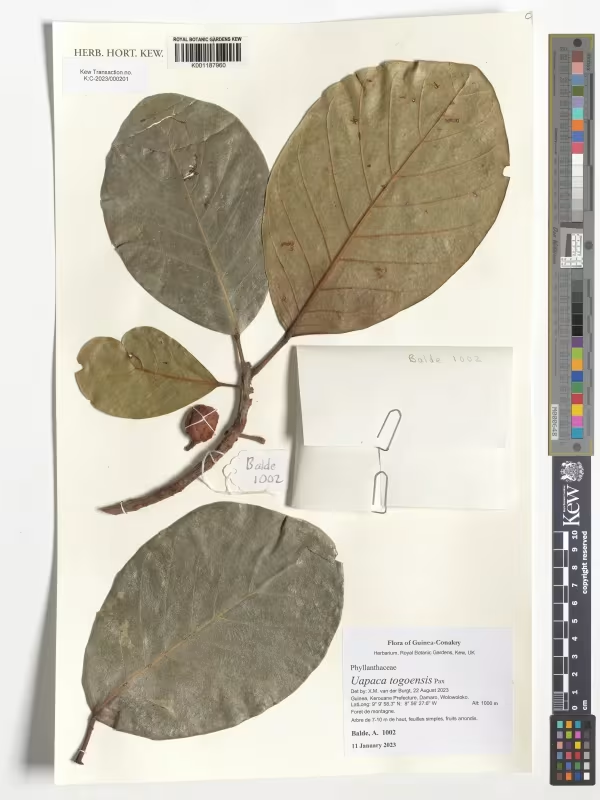
Description
Sowing dates
Propagation of Uapaca togoensis is primarily achieved through seeds, which must be harvested from mature, healthy mother trees to ensure high germination rates.
Seed treatment is recommended, including soaking in warm water to soften the hard outer seed coat and break dormancy before sowing in seedbeds.
The optimal time for sowing is at the onset of the rainy season, allowing the root system to establish itself before the intense heat of the dry season.
In nursery conditions, seedlings should be grown in deep containers to prevent root coiling and to facilitate the transition to field planting.
Spacing for permanent planting should be approximately 6 to 8 meters apart, depending on the site conditions, to ensure adequate access to nutrients and light.
Growing requirements
Uapaca togoensis belongs to the Phyllanthaceae family and is native to the woodland savanna regions of West and Central Africa.
The plant thrives in regions with a distinct tropical climate, showing high resilience to drought once it has reached the sapling stage.
Well-drained, acidic to neutral soils are preferred; the species generally avoids heavy, waterlogged clays that can lead to root diseases.
Sunlight is crucial for the healthy development of this species, making it an excellent candidate for reforestation projects in open, degraded areas.
Young plants benefit from organic mulching around the base, which helps retain soil moisture during the initial phases of field establishment.
Yield
The tree provides edible fruits that are widely appreciated by local communities, serving as an important dietary supplement during the dry season.
Yield capacity depends on environmental conditions and tree age, with mature specimens capable of producing significant harvests annually.
Beyond fruit, the tree is valued for its timber, which is known for its durability and resistance to decay, making it suitable for construction and craft.
Pruning is often suggested to improve fruit production by stimulating the development of productive branches and ensuring better air circulation.
The harvesting of fruit is typically an incremental process, as individual fruits on the tree may reach maturity at slightly different times.
Main diseases and pests
Wildfires pose a significant threat to young Uapaca togoensis plants, which are sensitive to heat until they develop a sufficiently thick protective bark.
Insect pests, particularly wood-boring beetles, can be problematic if the tree is stressed by drought or has sustained mechanical damage.
Fungal pathogens may emerge in high-humidity environments, especially if the planting density is too high and ventilation is restricted.
Human activities, such as intensive land clearing, remain the primary factor contributing to the loss of natural habitats for this species.
Integrated pest management, including regular inspection and the removal of infected plant material, is essential for maintaining healthy plantations.
Harvesting
Fruits are harvested manually when they reach the correct color and softening stage, indicating that they are fully ripe and suitable for consumption.
Because the fruits are highly perishable, they must be processed or marketed within a short timeframe after harvesting to maintain their quality.
Timber harvesting requires careful planning to ensure the sustainability of the population, focusing on trees that have reached their biological maturity.
Seeds intended for future planting should be extracted immediately after harvest, cleaned of pulp, and stored in a cool, dry place to prevent rot.
Proper tools should be used during harvest to avoid damaging the branches, as wounds on the tree can serve as entry points for various pathogens.