
Uapaca guineensis
Uapaca guineensis
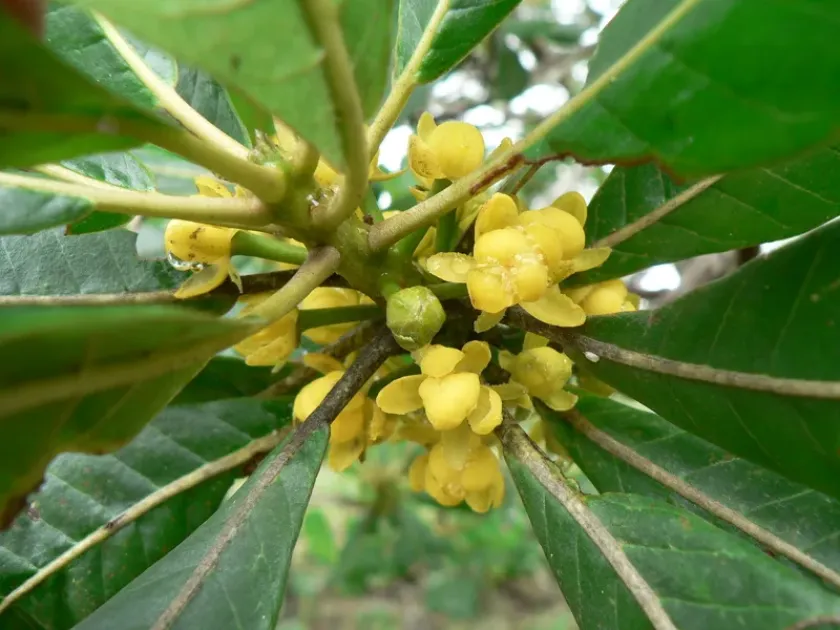
Description
Growing requirements
Uapaca guineensis is a prominent evergreen tree belonging to the Phyllanthaceae family. Native to the tropical forests of West and Central Africa, it is widely recognized for its adaptation to swampy environments and waterlogged soils.
Botanically, the species is distinguished by its distinct stilt roots, which provide stability in soft, saturated substrates. The tree can reach significant heights, often forming an important part of the forest canopy in its native range.
The climate requirements for this species are strictly tropical, necessitating high annual rainfall and consistently warm temperatures. It thrives in regions where the humidity remains high throughout the year without distinct dry seasons.
Soil requirements involve well-drained but moisture-retentive soils, rich in organic matter. While it can tolerate flooded conditions, it prefers deep soils that allow for robust root development and efficient nutrient absorption.
The economic utility of the tree is manifold, ranging from its high-quality, durable timber used in construction and heavy-duty furniture to its edible fruits, which provide a significant nutritional source for local communities.
Main diseases and pests
The primary threats to Uapaca guineensis include fungal pathogens that exploit the high-humidity environment, often leading to stem rot or leaf spot diseases that can compromise tree vitality.
Wood-boring insects present a persistent challenge, as they penetrate the trunk and branches, severely reducing the structural and commercial value of the timber if left unmanaged.
Termite infestations are common in regions where the trees are grown, particularly affecting the bark and lower trunk areas of trees that show signs of physiological stress.
Young seedlings are frequently targeted by various foliage-eating beetles and caterpillars, which can lead to stunted growth and reduced survival rates during the nursery phase.
Integrated pest management strategies focusing on promoting tree health and removing localized points of infection are essential for maintaining sustainable populations of this species.