
Uapaca nitida
Uapaca nitida
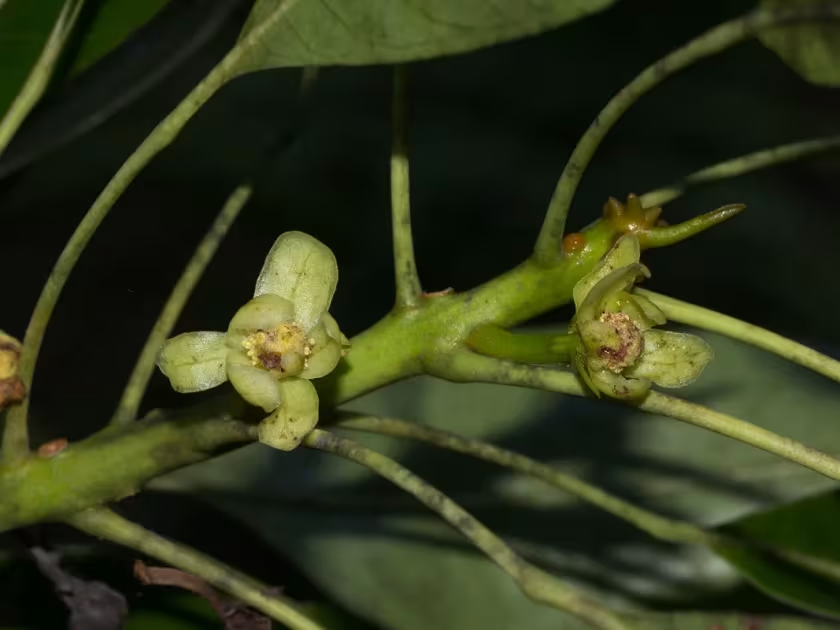
Description
Growing requirements
Uapaca nitida is an evergreen tree belonging to the Phyllanthaceae family. Native to the tropical regions of Africa, this species is commonly found in countries such as Angola, Zambia, and the Democratic Republic of Congo, where it thrives in miombo woodland environments.
The plant demonstrates a strong preference for well-drained, sandy, or rocky soils, which are typical of its natural habitat. It has evolved to be highly tolerant of prolonged dry seasons, making it a robust species for regions characterized by harsh climatic fluctuations.
Uapaca nitida requires significant sunlight for optimal growth. It is a slow-growing species that forms a dense canopy, which plays a vital role in providing shade and maintaining microclimatic conditions for understory vegetation within its ecosystem.
Botanically, the tree is distinguished by its leathery, glossy leaves that serve as an adaptation to reduce moisture loss. The tree can reach heights of 6 to 15 meters, and its structural integrity makes it a resilient component of the tropical savanna landscape.
When cultivating this species, proper soil preparation is essential. While it is naturally drought-resistant, providing adequate water during the initial establishment phase significantly increases the survival rate and long-term health of young saplings.
Yield
The primary economic value of Uapaca nitida lies in its edible fruits, which are a seasonal delicacy for many local communities. These fruits are nutrient-dense and serve as an important source of natural sugars and vitamins for regional populations.
Beyond its culinary uses, the wood of Uapaca nitida is highly regarded for its durability and resistance to decay. It is frequently harvested for construction purposes, making it an essential resource for rural infrastructure and various artisan crafts.
Medicinal applications of the plant are widely documented in traditional practices. Various preparations made from the bark and roots are used to address health issues, demonstrating the significant role this species plays in local healthcare systems.
The harvest timing is determined by the fruit's color and texture. Because the fruits are highly perishable, they are typically consumed or processed shortly after being collected, which supports small-scale local trade and home processing initiatives.
Sustainable agroforestry initiatives are focusing on propagating Uapaca nitida to enhance food security. By integrating this tree into local agricultural systems, communities can benefit from both wood production and recurring fruit harvests in a sustainable manner.
Main diseases and pests
The main threat to Uapaca nitida populations is the conversion of woodland into large-scale agricultural land. This loss of habitat poses a challenge to the regeneration of the species and puts pressure on existing natural stands.
While the tree is relatively resistant, it can be susceptible to specific insect pests that target leaves and buds. Monitoring for potential infestations is recommended in managed groves to prevent damage to the annual yield and foliage.
Fungal infections can occur if the root system is exposed to waterlogged conditions, which hinders oxygen exchange. Proper drainage and site selection are crucial to prevent the onset of root-related diseases that can be fatal to the tree.
Parasitic plants, such as mistletoe, can occasionally infest the branches of mature trees, potentially reducing their vigor over time. Periodic inspection and removal of these parasites help maintain the health and longevity of the trees.
Overgrazing by livestock in young plantations constitutes a significant risk. Protecting the saplings with appropriate fencing or natural barriers is a fundamental requirement to ensure that the trees reach maturity without being browsed or damaged.