
Uapaca sansibarica
Uapaca sansibarica
Description
Growing requirements
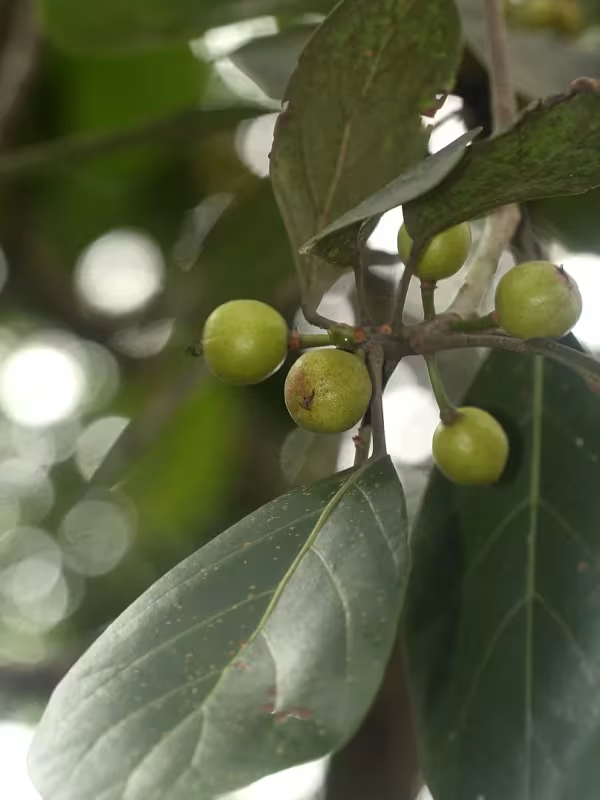
Uapaca sansibarica is a notable member of the Phyllanthaceae family, native to the tropical regions of Eastern and Southern Africa. This tree is recognized for its impressive stature, often reaching 20 meters, and its characteristic stilt roots that allow it to flourish in swampy and seasonally inundated environments.
The tree requires a tropical climate with consistent rainfall and warm temperatures throughout the year. It performs best in deep, fertile, and well-drained soils, showing a preference for loamy textures that hold sufficient moisture without becoming waterlogged for extended periods.
Botanically, Uapaca sansibarica features a dense, rounded crown of broad, leathery leaves. This foliage structure is highly efficient at intercepting light, contributing to the tree's vigorous growth rate in competitive forest environments where it often forms part of the canopy layer.
Agricultural management emphasizes the importance of moisture maintenance. While the tree is naturally adapted to wetlands, in orchard settings, consistent irrigation is vital during the early establishment phase to promote deep root development and structural stability.
Economically, the tree is highly valued for its edible fruits, which are consumed locally, and its durable wood, frequently used in carpentry. Furthermore, it plays a critical role in agroforestry projects, as it helps stabilize riverbanks and reduces soil erosion in humid tropical regions.
Main diseases and pests
The primary threats include fungal diseases that affect the bark and stem, particularly in areas with poor airflow. Root rot remains a significant risk if the soil becomes stagnant or if the site lacks proper drainage for long durations.
Pest management focuses on controlling boring insects that target the trunk and heartwood. Termites are a constant threat to young trees, necessitating the use of natural barriers or protective mulching to prevent infestation until the tree reaches a sufficient size and hardiness.
Harvesting
Harvesting takes place once the fruits reach physiological maturity, identified by a color change and softening. Due to the perishable nature of the ripe fruits, they are typically hand-picked and handled with care to minimize bruising during storage and transportation.