
Turbinicarpus gielsdorfianus
Turbinicarpus gielsdorfianus
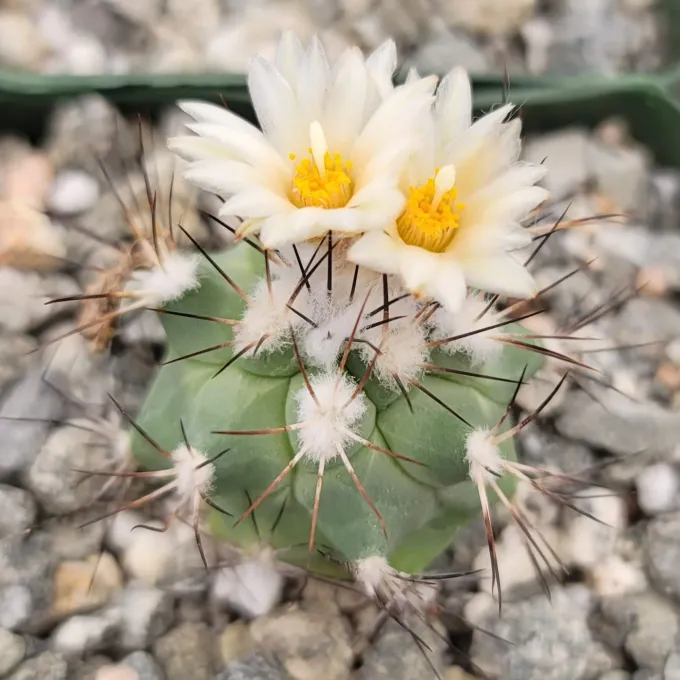
Description
Sowing dates
Sowing Turbinicarpus gielsdorfianus seeds is best performed during the spring months when temperatures remain consistently between 20 and 25 degrees Celsius.
A sterile, mineral-based substrate is essential for successful germination to prevent the development of damping-off diseases during the early stages.
Seeds are sown on the surface of the moist soil and should not be covered deeply, allowing light to stimulate the natural germination process.
Creating a high-humidity environment using a clear plastic cover or a specialized propagating box is critical for maintaining seedling health.
Once the seedlings have reached a sufficient size, they require gradual acclimatization to lower humidity levels to harden off the tissues.
Growing requirements
This species belongs to the Cactaceae family and is native to the arid limestone regions of San Luis Potosi and Tamaulipas in Mexico.
The plant requires intense light exposure throughout the year to maintain its compact growth form and to promote healthy flowering cycles.
Well-draining, gritty soil mixtures are mandatory to ensure that the roots do not remain saturated for extended periods, which is vital for survival.
Watering practices must be disciplined, allowing the growing medium to dry out completely between sessions to mimic the natural precipitation patterns.
Adequate ventilation is highly recommended, as it prevents thermal stress and creates an environment where the plant can thrive without fungal complications.
Main diseases and pests
Root rot, induced by excessive moisture or poor substrate drainage, remains the primary threat to the longevity of this desert-adapted specimen.
Mealybugs are common pests that infiltrate the crevices between tubercles, requiring careful inspection and application of targeted insecticidal treatments.
Spider mites can also be a significant issue in low-humidity environments, leading to unsightly damage and physiological weakness in the cactus.
Preventative measures, including thorough sterilization of pots and tools, are effective strategies to minimize the impact of pests and pathogens.
Monitoring the plant for discolouration or soft spots is a standard practice for agronomists to identify early signs of systemic infections.