
Turbinicarpus alonsoi
Turbinicarpus alonsoi
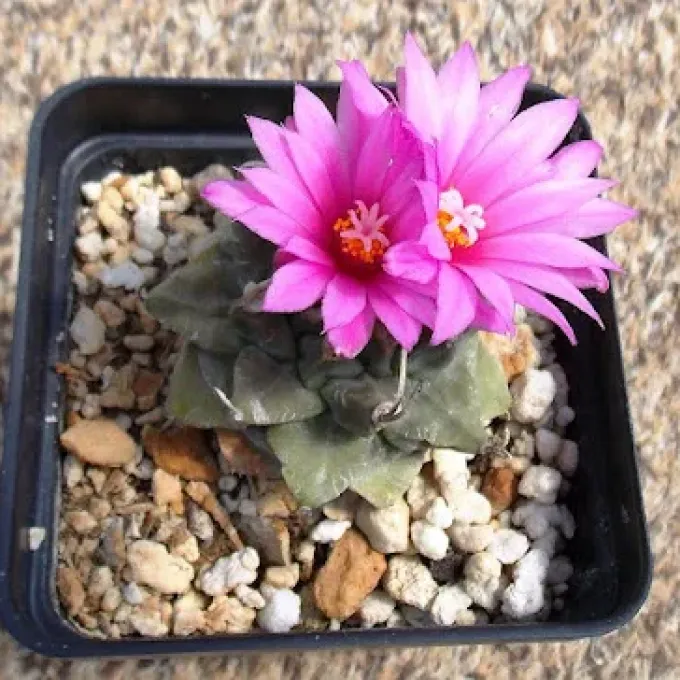
Description
Sowing dates
Seeds of Turbinicarpus alonsoi are best sown in early spring, requiring high humidity and stable warmth between 22 and 25 degrees Celsius.
A fine-textured, sterile mineral substrate is essential to ensure healthy germination and prevent damp-off diseases among young seedlings.
Seedlings should remain under protective covering until they develop their first set of thorns to maintain a stable microclimate.
Once established, the young plants must be acclimated to lower humidity levels gradually to strengthen their epidermis.
Given the slow growth rate of this species, patience is required as it may take several years for seedlings to reach a mature size.
Growing requirements
This species is native to the Mexican state of Guanajuato and thrives in limestone-rich environments, requiring alkaline soil conditions.
Bright, direct sunlight is crucial for this plant to maintain its compact shape and to stimulate the development of dense spination.
Watering should be strictly controlled, allowing the soil to dry out completely before applying water, especially during the active growth phase.
Winter dormancy is vital for Turbinicarpus alonsoi, during which the plant should be kept dry and cool to mimic its natural cycle.
The potting medium must provide excellent drainage, typically consisting of volcanic grit, sand, and limestone chips for optimal health.
Main diseases and pests
Root rot remains the primary threat to this cactus, often caused by poor drainage or excessive watering during dormant seasons.
Mealybugs are the most common pests, often lodging in the dense tufts of wool or between the ribs of the cactus stem.
Spider mites may affect the plant in low-humidity environments, leading to unsightly scarring on the epidermis of the cactus.
Regular inspection is recommended to detect any signs of discoloration or softening of the stem, which indicates early-stage rot.
Treatment involves adjusting moisture levels and applying appropriate pesticides specifically formulated for delicate succulent tissues.