
Canary creeper
Tropaeolum peregrinum L.
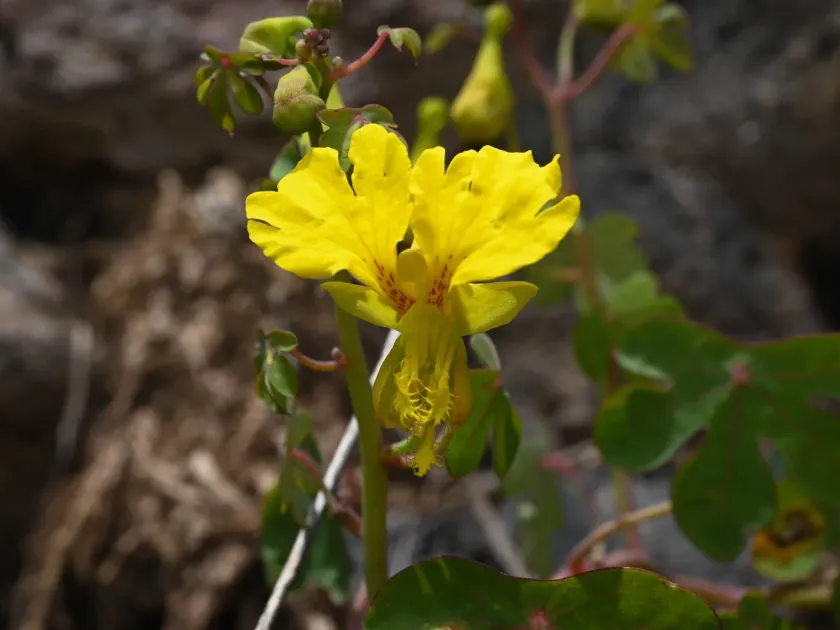
Description
Sowing dates
Canary creeper is a heat-loving plant, and sowing should only occur after all risks of spring frost have passed. In most regions, the ideal time for direct outdoor sowing is late May or early June when soil temperatures are consistently warm.
For gardeners in regions with shorter growing seasons, starting seeds indoors in late April is recommended. Using peat pots helps reduce root disturbance, which is crucial as this plant is sensitive to being moved.
Seeds should be planted at a depth of approximately 2 centimeters. Ensuring proper spacing of about 30 to 40 centimeters between plants allows for optimal air circulation and development of the vigorous climbing stems.
Consistent moisture is required during the germination process. Pre-soaking the seeds in warm water for 24 hours prior to planting is a common practice to break dormancy and ensure more uniform seedling emergence.
The selection of an appropriate site is critical; choose a location that provides ample sunlight while protecting the delicate vines from strong, drying winds during the early stages of growth.
Growing requirements
The Canary creeper, a member of the Tropaeolaceae family, originates from the mountainous regions of South America. It is a perennial climber that is typically grown as an annual in temperate climatic zones.
This plant thrives in well-drained, moderately fertile soil. Excessively rich soil, particularly with high nitrogen levels, will encourage dense foliage growth at the expense of its characteristic canary-yellow flowers.
As a climbing vine, it requires support structures such as trellises, fences, or wires. It utilizes its sensitive leaf petioles to coil around supports, allowing it to reach heights of several meters.
The crop demands high light levels to sustain its blooming period. While it can tolerate partial shade, full sun exposure is ideal for maximizing the number of fringed, unique blossoms produced during the summer.
Irrigation management is vital, as the plant requires steady moisture but cannot tolerate waterlogged soil. Proper drainage is essential to prevent root rot, which is the most common cause of failure in poorly maintained beds.
Main diseases and pests
The Canary creeper is relatively robust, but it can be susceptible to aphid infestations, particularly in dry and hot conditions where plant stress is high.
Bacterial wilt and leaf spot diseases can occur if humidity levels remain too high or if the air circulation around the dense foliage is restricted, leading to damp conditions.
Maintaining clear ground and removing fallen debris helps reduce the likelihood of fungal pathogens establishing themselves near the base of the plant.
Integrated pest management, focusing on physical removal or natural soap-based sprays, is preferred to maintain the health of the plant throughout the growing season.
Regular monitoring for early signs of disease and removing affected leaves immediately is the most effective strategy to ensure the vine remains healthy and vibrant until the first frost.