
Hybrid Toad Lily
Tricyrtis nana Yatabe x Tricyrtis ohsumiensis Masam.
Description
Growing requirements
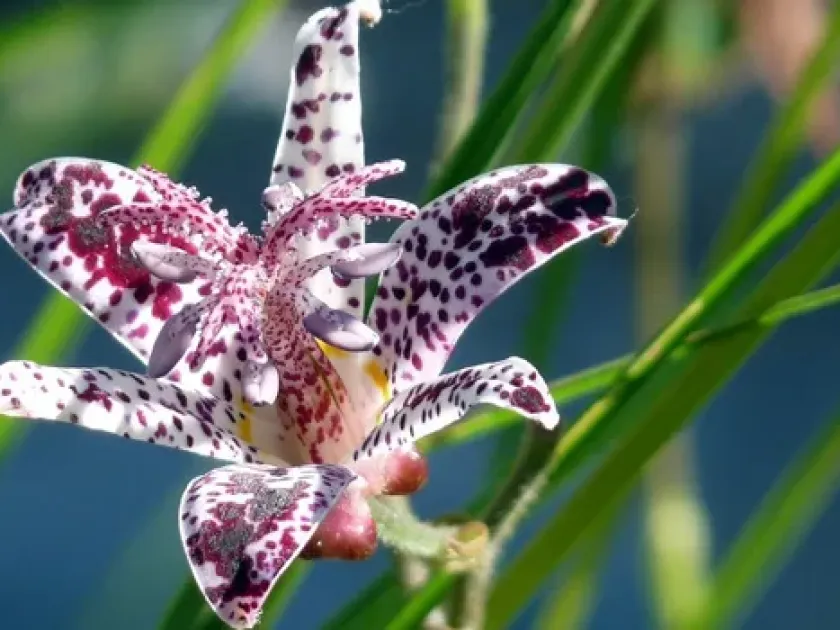
The hybrid Toad Lily is a perennial plant belonging to the Liliaceae family. It is a result of cross-breeding Tricyrtis nana and Tricyrtis ohsumiensis, which resulted in a plant known for its unique orchid-like appearance and compact growth habit.
This crop thrives in partial to full shade. Direct exposure to intense sunlight can scorch the foliage and shorten the blooming season, so planting under high-branched trees or on the shaded side of buildings is strongly recommended for optimal growth.
The soil must be rich in organic matter, moist, yet exceptionally well-drained. Tricyrtis species are sensitive to waterlogged conditions, which can lead to root rot during dormant winter months, especially in heavier soil types.
A neutral to slightly acidic pH is ideal for the hybrid Toad Lily. Gardeners should incorporate organic mulches like leaf mold or compost to maintain soil moisture and provide a steady supply of nutrients, mimicking the natural woodland habitat of the plant.
In cooler climates, winter protection is essential. A thick layer of mulch or a light covering of pine boughs will protect the crown of the plant from extreme temperature fluctuations and frost heaving, ensuring the plant returns healthy in the spring.
Main diseases and pests
Slugs and snails are the most significant pests for Tricyrtis. They are particularly active during damp weather and can quickly defoliate young plants by feeding on fresh leaves, leaving behind unsightly holes and irregular edges.
Control measures include manual removal in the early morning or evening hours, as well as the use of iron phosphate-based slug bait, which is safer for the surrounding garden environment compared to traditional chemical alternatives.
Gray mold (Botrytis) is a common fungal threat, especially when planting density is too high, preventing proper air circulation. Affected parts should be pruned back immediately to prevent the fungus from spreading to the main stems.
Root rot occurs if the soil remains excessively wet for prolonged periods. To prevent this, ensure that your planting site has been properly amended with coarse sand or horticultural grit if the natural soil is clay-heavy.
Aphids can occasionally cluster on the buds of the Toad Lily. While usually not fatal, a severe infestation can weaken the plant and cause bud drop. Horticultural oils or insecticidal soaps are usually sufficient to manage these populations without damaging the flowers.