
Tricyrtis formosana
Tricyrtis formosana Baker
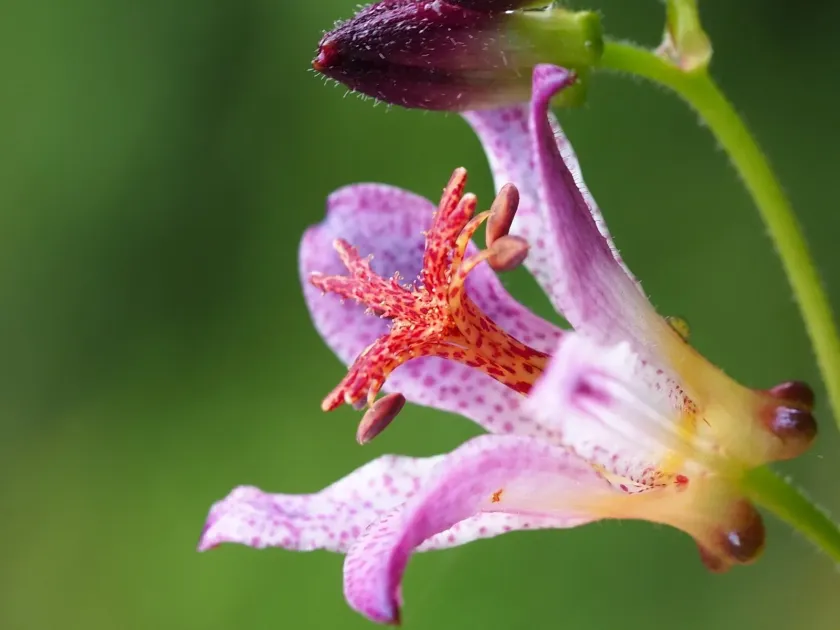
Description
Sowing dates
Tricyrtis formosana, belonging to the Liliaceae family, can be propagated through seeds or division. Seeds require a period of cold stratification to break dormancy; sowing them outdoors in late autumn allows the natural winter temperatures to initiate the germination process.
For indoor propagation, seeds should be refrigerated for approximately 4 to 6 weeks before sowing in a well-draining potting mix. Once germinated, the seedlings should be kept in a cool, bright location with consistent moisture levels to promote healthy root development.
Division of the rhizomes is the preferred method for established plants, ensuring consistent characteristics. This process is best performed during the dormant season, specifically in early spring before new growth appears, or in late autumn after flowering.
When transplanting, ensure each section of the rhizome contains several healthy buds. Proper spacing is essential, with plants set 30-40 cm apart to allow for lateral expansion and sufficient airflow, which is critical for long-term plant health.
Newly planted sections should be watered thoroughly and mulched. A layer of organic mulch helps retain soil moisture and stabilizes temperature, protecting the developing root system from the drying effects of wind and sun exposure.
Growing requirements
The plant thrives in partial to full shade, making it an excellent candidate for woodland gardens or north-facing borders. Intense direct sunlight will cause foliage scorch and may lead to a stunted appearance, significantly reducing its ornamental value.
Soil requirements are strict: the plant necessitates humus-rich, moist, but well-draining soil with a slightly acidic pH. Heavy clay soils must be amended with organic compost and grit to prevent waterlogging, which the species does not tolerate well.
Consistent moisture is the primary factor for successful cultivation. During dry spells in summer, irrigation must be frequent and deep, as the shallow root system is highly sensitive to desiccation, which quickly halts the blooming cycle.
While relatively hardy, the plant benefits from winter protection in colder climates. Applying a thick layer of mulch or pine boughs around the base during winter prevents deep soil freezing and helps the plant emerge vigorously in the spring.
Nutrient management involves applying a balanced fertilizer or well-rotted manure in early spring. Avoid excessive nitrogen, which can lead to lush leaf growth at the expense of the unique, orchid-like flowers for which the plant is prized.
Main diseases and pests
Slugs and snails are the most frequent pests, particularly during damp spring weather. They target the succulent new foliage and emerging flower buds, necessitating the use of organic deterrents or manual removal to protect the plant's aesthetic integrity.
Fungal issues, such as leaf spot or grey mold, may occur if the planting site lacks adequate air circulation. Ensuring the plants are not overcrowded and pruning away any dead or decaying foliage helps to mitigate these humidity-related risks.
Aphids can occasionally cluster on the flower stems. Early detection and treatment with insecticidal soap or neem oil are generally effective, provided the infestation is addressed before significant damage occurs to the floral structures.
Root rot remains a significant threat, primarily caused by poor drainage or overwatering. Once established, root rot is difficult to treat, making preventative measures like site selection and soil amendment the most important aspects of plant protection.
Maintaining a clean garden environment by removing leaf litter and debris at the end of the season reduces the habitat for many potential pathogens. This simple sanitary practice is vital for maintaining a healthy and thriving Tricyrtis colony.