
Tricyrtis hirta
Tricyrtis hirta (Thunb.) Hook.
Description
Sowing dates
Propagation of Tricyrtis hirta is typically achieved through seeds or division of existing clumps. Seeds require a period of cold stratification, usually lasting several weeks, to break dormancy and ensure successful germination in the spring.
When sowing in trays, use a well-draining, peat-based mix. Keep the soil consistently moist but never waterlogged. Seedlings are delicate and should be protected from direct sunlight during their first year of growth to prevent scorching.
Division is the preferred method for established plants. This should be performed in early spring as new growth emerges. Carefully lift the rhizome and divide it into sections, ensuring each piece has healthy buds and roots attached.
Replant the divisions at the same depth as the parent plant. Proper spacing is crucial to prevent competition for nutrients and to allow sufficient airflow, which helps in preventing foliage diseases.
After transplanting, water thoroughly and add a layer of organic mulch around the base of the plant to retain soil moisture and stabilize the root temperature during the initial establishment phase.
Growing requirements
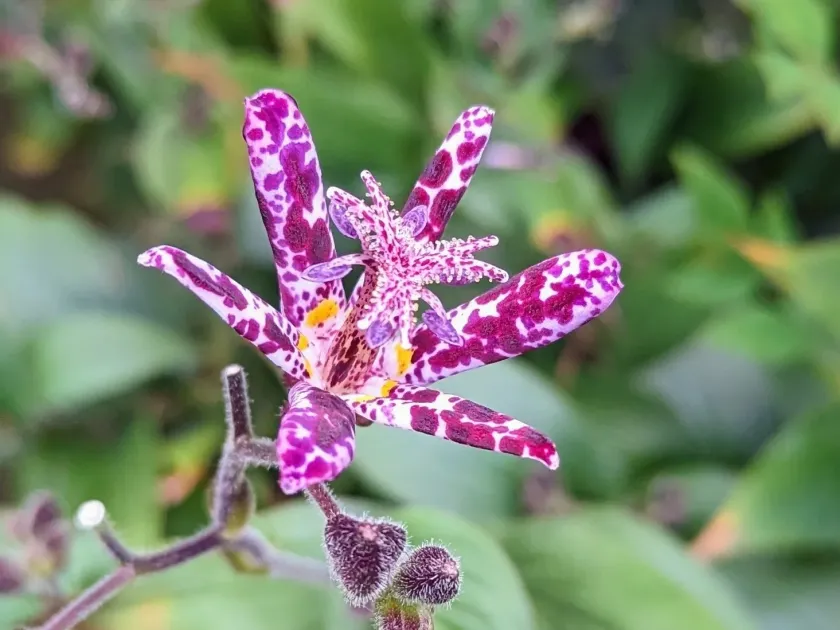
Tricyrtis hirta, a member of the Liliaceae family, is native to the wooded areas of Japan. It is a shade-loving herbaceous perennial known for its unique, orchid-like spotted flowers that bloom in late summer and autumn.
The plant thrives in rich, moist, but well-draining soil. It prefers a pH level that is neutral to slightly acidic. Incorporating plenty of organic matter, such as leaf mold or well-rotted compost, into the planting site is highly recommended.
Site selection is critical for success. Tricyrtis hirta requires a sheltered spot with dappled or deep shade. Protection from the harsh midday sun is essential, as the leaves can easily burn and the flowers may fade prematurely.
While the plant is hardy, it benefits from extra protection in regions with harsh winters. A thick layer of mulch applied in late autumn will protect the rhizomes from freezing temperatures and frost heaving.
Maintenance involves keeping the soil consistently moist throughout the growing season. In drier climates, supplemental irrigation is necessary to ensure the plant remains vigorous and productive.
Main diseases and pests
Slugs and snails are the most common pests for the toad lily. They are particularly attracted to the tender emerging shoots and foliage in the spring. Implementing manual control or using safe slug pellets is effective.
Fungal issues, such as leaf spot, can occur in environments with poor air circulation or excessive moisture. To mitigate this, ensure the plants are not overcrowded and water only at the base, avoiding overhead irrigation.
Root rot is a potential danger if the soil drainage is inadequate. This condition often results from waterlogging, so it is vital to improve soil structure with grit or coarse sand if planting in heavy clay soils.
Aphids can occasionally infest the flower buds. While rarely fatal, they can distort the blooms. Regular scouting and the use of insecticidal soap or neem oil can help manage localized infestations.
- Monitor for pests regularly during the wet spring season.
- Avoid over-fertilization, as it can encourage soft, succulent growth that is more prone to pest attacks.