
Trichomanes latealatum
Trichomanes latealatum
Description
Growing requirements
Trichomanes latealatum is a member of the Hymenophyllaceae family, commonly referred to as a filmy fern. This species is not an agricultural crop in the economic sense but is a plant of high botanical interest, often cultivated by hobbyists and specialized botanical gardens.
The native habitat of this fern is within the humid tropical forests of Asia, where it grows in the deep understory. It is typically found in close proximity to waterfalls or in damp crevices, areas characterized by perpetual shade and extremely high levels of ambient humidity.
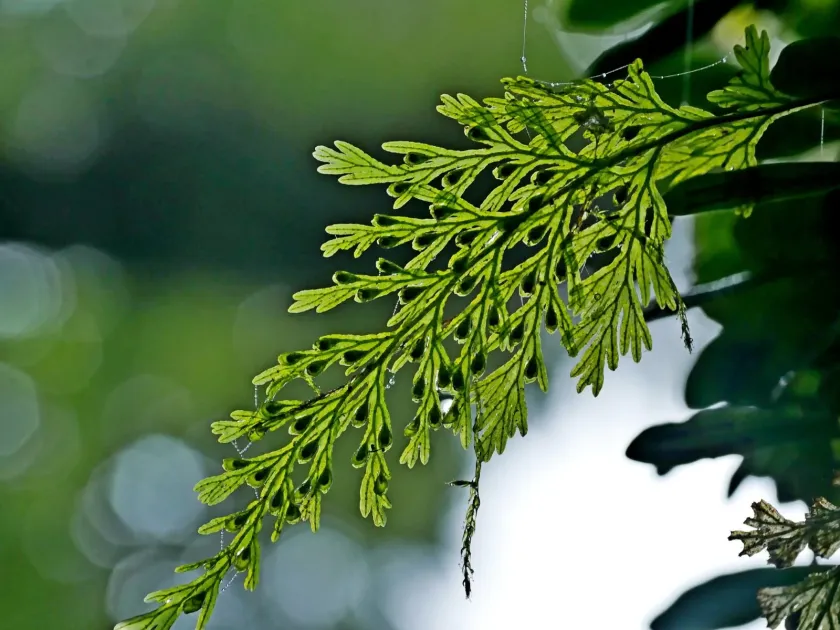
The plant is anatomically unique due to its translucent fronds, which are only one cell layer thick. Lacking stomata, the leaves absorb moisture directly from the air, making the species highly intolerant to low humidity levels or dry drafts, which can lead to rapid desiccation.
Successful cultivation requires a highly controlled microclimate, typically managed within a terrarium or a closed display case. Optimal growth is observed at stable temperatures ranging from 20 to 24 degrees Celsius, with light levels kept low to avoid overheating and tissue damage.
The growing medium for this species should be highly specialized, consisting of a mix that remains moist but provides sufficient aeration, such as live or dried sphagnum moss combined with charcoal. Fertilization should be kept at a absolute minimum due to the sensitivity of the roots.
Main diseases and pests
Pathogenic fungi represent the most significant threat to the plant, particularly in stagnant, high-humidity environments. Proper airflow is essential to prevent the accumulation of moisture on the frond surfaces, which can trigger rapid rot.
Pests such as scale insects may occur in conservatory settings, though the extreme humidity required by the plant generally acts as a deterrent for many common greenhouse pests. Careful visual inspection is the best defense against potential infestations.