
Trichomanes alatum
Trichomanes alatum
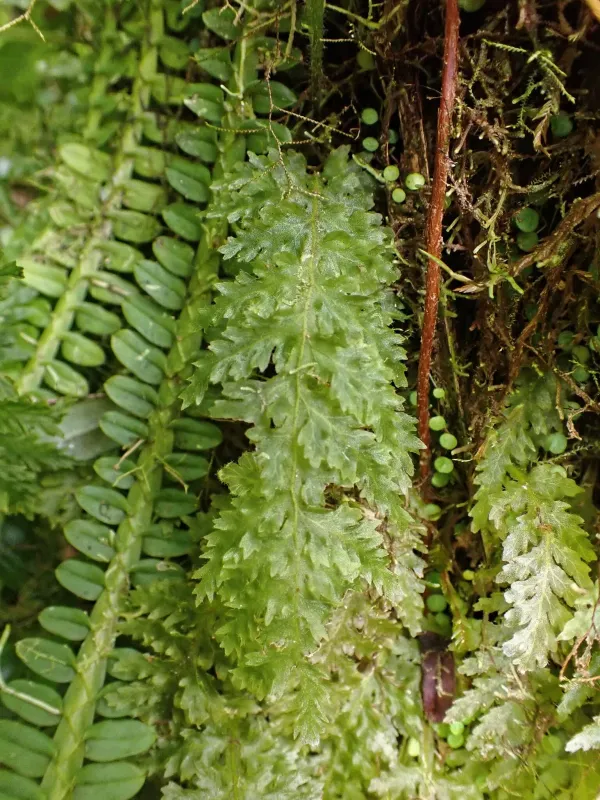
Description
Growing requirements
Trichomanes alatum is a member of the Hymenophyllaceae family. In the wild, this fern inhabits tropical rainforests of the Caribbean and South America, thriving in extremely humid and shaded environments.
The plant possesses unique botanical features: its fronds are characterized by exceptional thinness, often consisting of only a single layer of cells. This makes the species highly sensitive to air humidity levels and temperature fluctuations.
Successful cultivation of this species requires a consistently high humidity level, close to 90-100%, which usually necessitates the use of terrariums or enclosed containers in greenhouse or indoor settings.
The soil substrate must be loose, moisture-retentive, and slightly acidic, mimicking forest litter. Ideal mixtures include shredded sphagnum moss, charcoal, and peat fiber with an addition of perlite for structure.
The culture reacts very negatively to direct sunlight and drafts. Low to moderate diffused light is considered optimal, as direct sun rays quickly cause burning and desiccation of the delicate frond blades.
Harvesting
The economic use of this species is limited exclusively to ornamental gardening and the collection of rare ferns. Trichomanes alatum is not considered an agricultural or industrial crop.
Propagation is most commonly achieved through vegetative methods, specifically by rhizome division. Commercial-scale propagation is challenging due to strict microclimate requirements, limiting its availability in the general market.
Proper maintenance requires careful watering with distilled or rainwater, as the plant is highly sensitive to the mineral salts and chlorine found in tap water.
In enclosed systems, the plant requires almost no pruning. Only old, decaying fronds should be removed using a sterilized tool to avoid damaging the primary growing point of the rhizome.
To maintain health, occasional misting with soft water is recommended, provided that adequate ventilation is maintained to prevent moisture stagnation and the development of fungal pathogens.