
Trichomanes crispum
Trichomanes crispum
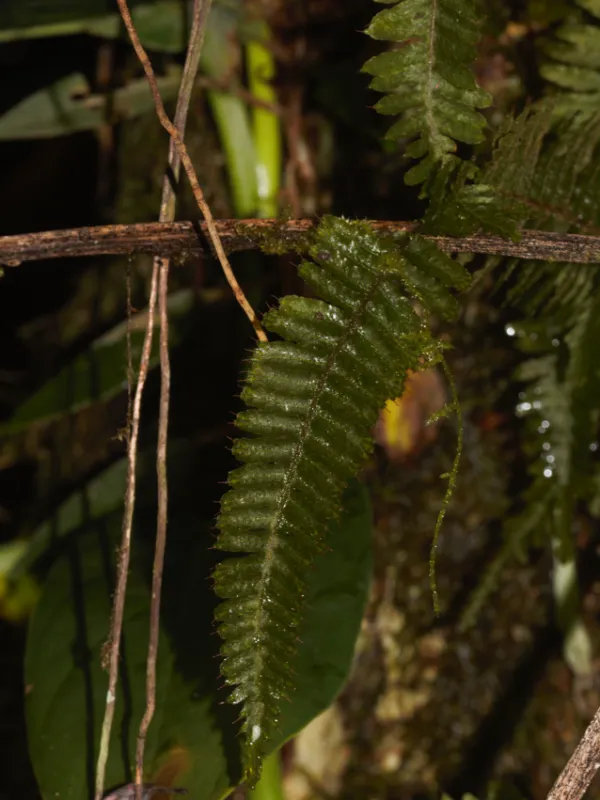
Description
Growing requirements
Trichomanes crispum is a distinctive fern belonging to the Hymenophyllaceae family. Often referred to as a filmy fern, this plant is native to the tropical rainforests of Central and South America, where it thrives in shaded and humid understories.
This species requires a very specific microclimate to survive. In cultivation, it is almost exclusively kept in terrariums, vivariums, or high-humidity greenhouse environments where ambient humidity consistently remains above 80 percent.
The substrate for this fern must be highly permeable and moisture-retentive. A mixture of long-fibered sphagnum moss, perlite, and fine orchid bark is generally recommended to ensure the roots have access to oxygen while remaining consistently moist.
Light requirements are minimal; the plant prefers deep shade or diffused light. Direct sunlight is lethal to Trichomanes crispum, as its thin, translucent fronds lack the protective cuticle found in most other terrestrial plants.
Temperature management is crucial. The plant prefers a stable environment between 18 and 24 degrees Celsius. It does not tolerate heat spikes or cold drafts, which can cause the delicate foliage to curl and perish rapidly.
Main diseases and pests
The primary threat to Trichomanes crispum in captivity is the onset of fungal and bacterial infections, usually triggered by poor air circulation and excessive water accumulation on the fronds.
Pests such as fungus gnats, whose larvae feed on decaying organic matter, can occasionally target the root system, weakening the plant and making it susceptible to secondary pathogen attacks.
Spider mites are another significant pest, particularly if the humidity levels fluctuate or drop for extended periods, creating an environment favorable for these arachnids to thrive.
Manual removal of pests is the safest approach, as the leaves are highly sensitive to systemic insecticides, which can easily damage the cell structure of the plant.
Prevention relies on maintaining strict sanitary conditions within the growing environment, using sterilized substrate components, and avoiding the use of contaminated water sources.