
Trichomanes atrovirens
Trichomanes atrovirens
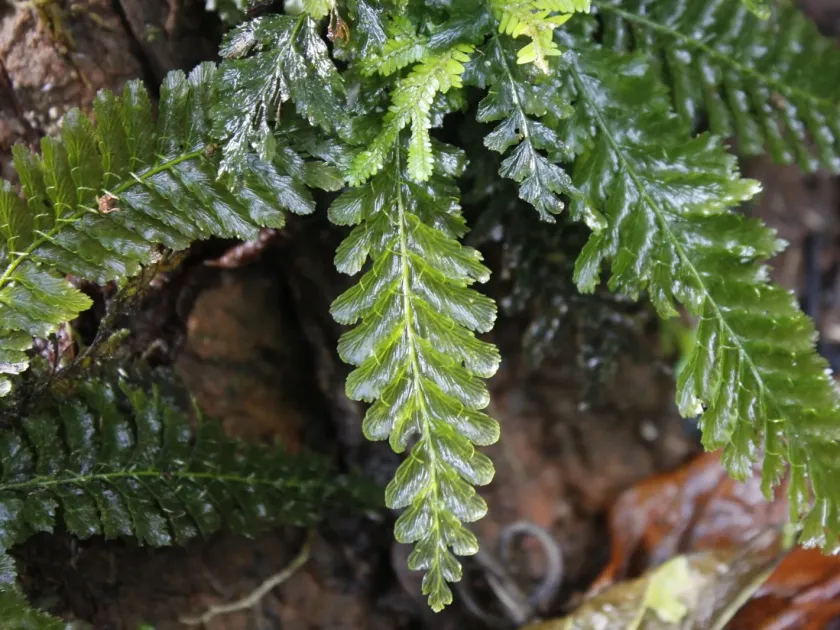
Description
Growing requirements
Trichomanes atrovirens is a specialized fern species belonging to the Hymenophyllaceae family. Naturally occurring in humid tropical forest environments, this plant typically thrives as an epiphyte, colonizing surfaces that retain moisture throughout the year.
The primary botanical characteristic of this species is its fragile, translucent fronds, which are often only a single cell layer thick. This unique anatomy makes the plant highly dependent on high atmospheric humidity to prevent desiccation of the photosynthetic tissues.
Successful cultivation requires a stable, high-humidity environment, preferably maintained within a closed terrarium or specialized glass enclosure. The plant does not tolerate direct sunlight and requires filtered, low-intensity light to maintain its deep green coloration.
Regarding soil requirements, the culture prefers a loose, well-draining substrate consisting of long-fiber sphagnum moss and organic matter. Ensuring the pH remains slightly acidic is crucial for the long-term health and growth of the rhizomes.
In terms of agricultural and horticultural use, Trichomanes atrovirens is highly sought after by collectors of exotic flora and paludarium hobbyists. Its delicate appearance and specific environmental needs make it a niche plant for professional indoor gardens.
Main diseases and pests
The most significant threats to this fern include fungal infections and bacterial rots, often triggered by stagnant air or waterlogged conditions within closed environments. Proper aeration management is essential to prevent these issues from damaging the delicate leaves.
Pests like spider mites or mealybugs can occasionally infest the plant if humidity levels drop significantly. Due to the thin-leaved structure, mechanical pest removal is preferred over strong chemical treatments, as the foliage is highly susceptible to phytotoxicity.