
Tiquilia plicata
Tiquilia plicata
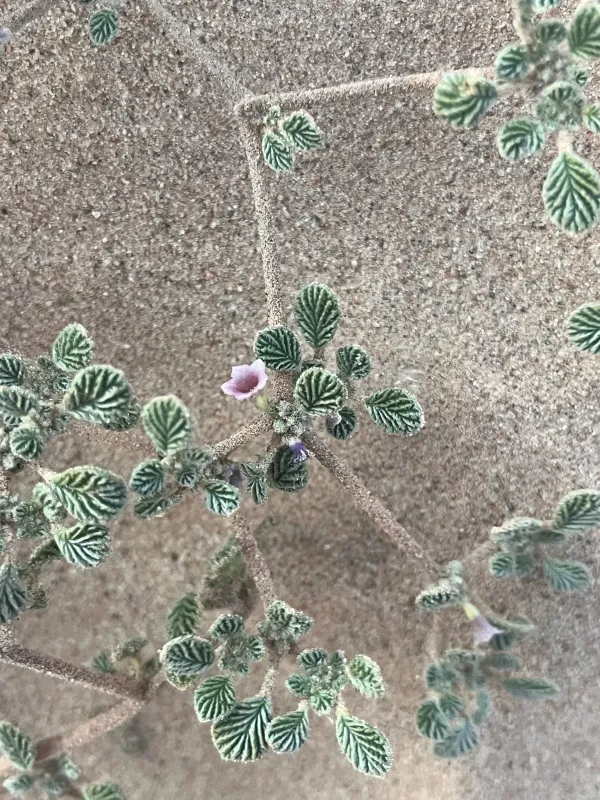
Description
Sowing dates
Tiquilia plicata is a wild desert species that is not commercially cultivated, and there are no standardized agricultural sowing practices for it.
In its natural habitat, seed germination is strictly dependent on specific patterns of seasonal precipitation, often following winter or spring rains.
Experimental propagation attempts involve sowing seeds in coarse sandy substrates that mimic the soil structure of the Mojave and Colorado deserts.
Seeds of this species are known for high levels of dormancy, requiring specific environmental triggers to break and initiate the growth cycle.
Due to the lack of agricultural demand, there are no established seed production protocols or large-scale sowing technologies available for this plant.
Growing requirements
The plant belongs to the Boraginaceae family and is recognized for its adaptation to extreme heat and prolonged moisture deficit.
Tiquilia plicata is native to the desert regions of the southwestern United States, primarily thriving in sandy dunes and open desert plains.
Its botanical structure includes prostrate, spreading stems and specialized hairs that help minimize transpiration and water loss during the day.
The species requires full sun exposure and extremely well-drained, nutrient-poor sandy soils to maintain its physiological functions.
Root systems are adapted to reach deep soil moisture, which is critical for survival during the severe drought months typical of its native range.
Yield
As a non-agricultural wild plant, Tiquilia plicata does not provide an economic yield in terms of harvested biomass or edible parts.
Its ecological value lies in soil stabilization and as a primary producer in the fragile food webs of desert ecosystems.
There is no industrial interest in the harvest of this species, so parameters regarding yield per hectare do not exist in agronomic data.
Potential future interest might emerge in the context of xeriscaping or ecological restoration of degraded arid lands.
The total biomass production is inherently low, reflecting the limited resources available in its harsh environmental niche.
Main diseases and pests
Tiquilia plicata faces minimal pressure from common agricultural pests due to the extreme conditions of its habitat and isolation.
Habitat loss resulting from human activity and climate-driven changes in rainfall are the primary threats to the stability of its populations.
The plant has natural resistance to many common fungal diseases because its environment is too dry for typical pathogen proliferation.
There are no known insect pests that specifically target Tiquilia plicata to the extent of causing significant damage to the species.
Mechanical damage from off-road vehicles and soil disturbance are the most immediate threats currently facing the wild populations.
Harvesting
Harvesting for commercial or industrial purposes is non-existent as the plant is not a recognized agricultural crop.
Any collection of seeds or plant material from the wild is strictly regulated or prohibited in many protected desert areas.
Botanical research or preservation efforts involve careful manual collection of specimens without disrupting the local soil crust.
There are no specialized mechanical tools designed for harvesting this species, as it remains a component of natural flora.
The conservation status and slow growth rate make sustainable harvesting of this plant highly impractical and ecologically damaging.