
Tiquilia canescens
Tiquilia canescens
Description
Growing requirements
Tiquilia canescens, commonly known as woody crinklemat, is a perennial subshrub belonging to the Boraginaceae family. It is a highly specialized xerophyte native to the southwestern United States and northern Mexico, well-adapted to harsh desert environments.
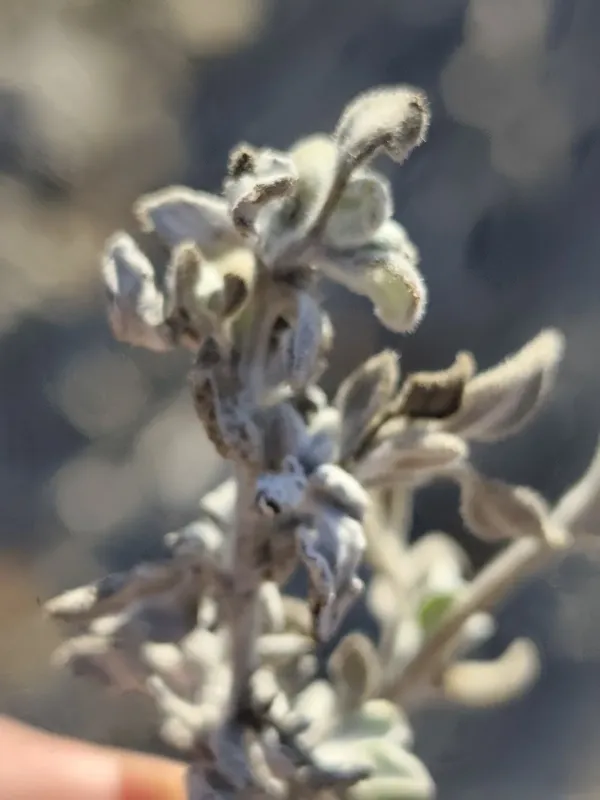
The plant is distinguished by its low, spreading growth habit and dense covering of gray, silky hairs. These trichomes are a critical adaptation, providing protection against intense solar radiation and minimizing water loss through transpiration in arid climates.
The ecological niche of Tiquilia canescens is primarily gravelly, sandy, or rocky soils found in desert scrub habitats. It thrives in regions with very low annual precipitation and is highly effective at surviving in nutrient-poor substrates where competition from other vegetation is minimal.
For successful cultivation, excellent drainage is the most vital requirement. The soil must allow for rapid water infiltration, as stagnant water in the root zone quickly leads to physiological stress and root rot in this species.
Economically, this species is valuable for environmental restoration, specifically in projects focused on soil erosion control and the stabilization of shifting sands in arid zones. It is also increasingly used in sustainable landscaping to create low-maintenance, water-wise gardens.
Main diseases and pests
Tiquilia canescens is inherently resistant to many common pests, thanks to its specialized physiological adaptations. However, fungal pathogens can become a significant threat if the plant is grown in areas with high humidity or poor soil drainage.
Root rot, caused by excessive moisture, remains the primary threat to the longevity of the plants. Prevention is achieved by selecting well-draining sites and ensuring proper spacing to maintain airflow, which keeps the foliage dry.
Herbivores, particularly rodents, may pose a threat to younger plants by grazing on foliage or gnawing on stems when natural forage is scarce. Protective netting or fencing may be necessary in the initial stages of establishment in restoration projects.
Pest management should focus on early detection of insects that might consume plant tissues. Due to the slow growth rate of the species, mechanical weed control is essential during the establishment phase to prevent competition for limited resources.
Integrated pest management in this context emphasizes cultural practices rather than chemical treatments, aligning with the plant’s role in sustainable desert ecology and soil conservation.