
Nuttall's tiquilia
Tiquilia nuttallii
Description
Growing requirements
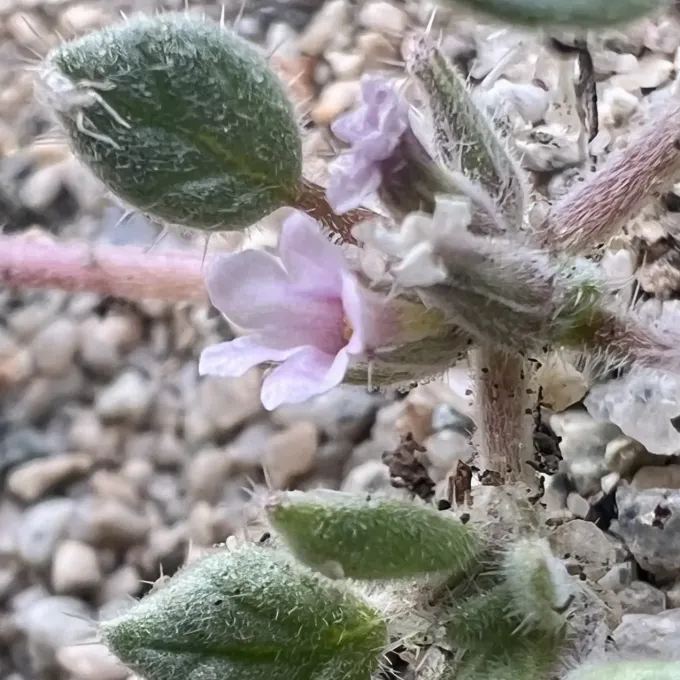
Nuttall's tiquilia (Tiquilia nuttallii) is a specialized herbaceous plant belonging to the Boraginaceae family. It is naturally adapted to the harsh, arid environments of western North America, thriving in regions with extremely low annual precipitation.
The plant exhibits significant botanical adaptations, including a dense, mat-forming growth habit. This structure minimizes surface area exposure to heat and helps stabilize the soil around the primary root system, which extends deep into the substrate.
Cultivation of this species requires well-draining, sandy, or rocky soils. It is highly sensitive to soil compaction and water retention, which are the primary limiting factors for its development in a controlled environment.
Optimal growth conditions involve high solar radiation and arid ambient air. The plant is a quintessential xerophyte, capable of maintaining metabolic stability under direct sun exposure that would wilt most agricultural crops.
Maintenance of Tiquilia nuttallii requires strict irrigation control. Even in peak growth periods, the moisture level should be kept at a minimum to prevent the physiological distress of the root system.
Main diseases and pests
Pathogenic threats to Tiquilia nuttallii are predominantly linked to fungal root rot triggered by improper drainage. Once established, these infections are difficult to control due to the plant's delicate root structure.
Pest pressure is generally low, although occasionally certain desert-adapted insect larvae may feed on the foliage. These incidents are usually sporadic and rarely require chemical intervention in a natural setting.
Environmental stress caused by sudden, prolonged increases in humidity is considered a critical threat. The plant lacks the mechanisms to handle high moisture levels, which disrupt its natural defense pathways.
Competition from invasive plant species poses a significant risk to native populations. Aggressive weeds can quickly overtake the space, depriving Tiquilia nuttallii of essential sunlight and space.
Mechanical disturbance of the soil crust is a major threat. The plant relies on undisturbed soil to maintain its root anchoring; once the soil profile is broken, the plant becomes highly susceptible to uprooting.