
Tiquilia mexicana
Tiquilia mexicana
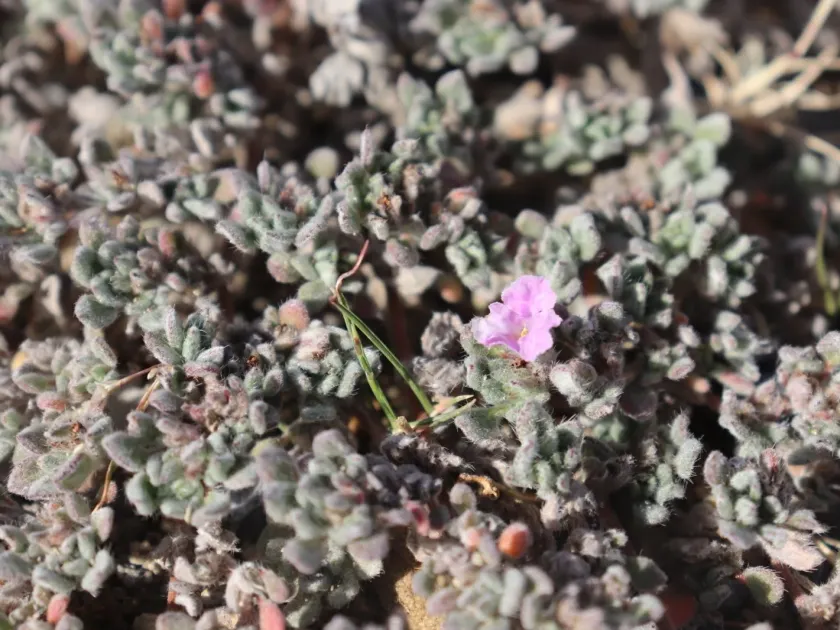
Description
Growing requirements
Tiquilia mexicana is a perennial herbaceous plant belonging to the Boraginaceae family. It is native to the arid regions of Mexico, where it has evolved to survive in extreme desert environments with minimal rainfall and high evaporation rates.
The plant exhibits a low-growing or mat-forming habit, which is a classic adaptation for desert flora. This growth structure helps the plant maintain a microclimate near the ground and protect its core tissues from the harsh environmental conditions of its habitat.
In terms of cultivation, Tiquilia mexicana requires soils with excellent drainage, such as sandy or rocky substrates. It is highly intolerant of heavy, clay-based soils that retain moisture, as these promote root decay and fungal infections.
The species is strictly adapted to full sun exposure and high heat. It thrives in locations where solar radiation is intense, and it possesses physiological mechanisms to maintain water balance despite long periods of drought.
While not a major commercial agricultural crop, this plant holds significant value for xeriscaping and ecological restoration projects. Its ability to stabilize soil in arid regions makes it a useful species for preventing erosion in desert gardens and disturbed lands.
Main diseases and pests
The primary threat to Tiquilia mexicana is excessive soil moisture, which inevitably leads to root rot and systemic decay. High atmospheric humidity combined with poor airflow can also facilitate the growth of pathogens.
Pests such as spider mites can occasionally affect the plant, particularly when it is grown in environments that do not replicate its native arid climate. Proper ventilation and strictly controlled watering are essential for preventing these issues.