
Tiquilia gossypina
Tiquilia gossypina
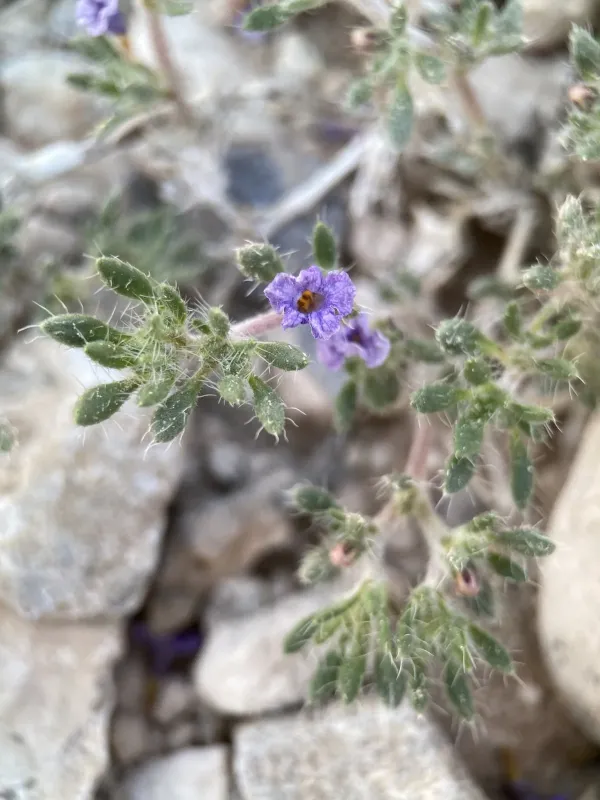
Description
Growing requirements
Tiquilia gossypina is a perennial subshrub belonging to the Boraginaceae family. It is a highly specialized plant that has evolved to thrive in the harsh, arid environments of the South American high-altitude deserts.
The plant is native to the Andean regions, specifically in Peru and Bolivia. It is uniquely adapted to withstand extreme diurnal temperature fluctuations, intense UV radiation, and prolonged periods of drought typical for its high-mountain habitat.
In terms of cultivation, this species requires substrates that mimic its native rocky, sandy, and nutrient-poor soils. Excellent drainage is not just recommended, but an absolute requirement to prevent the rot that this plant is naturally sensitive to.
The primary botanical feature of Tiquilia gossypina is its dense, cotton-like indumentum, or hairiness. This silver-white coating reflects sunlight and creates a boundary layer that significantly reduces water loss through transpiration.
While not a traditional agricultural crop, Tiquilia gossypina is valuable for botanical research and xeriscaping enthusiasts. Its ability to survive with minimal water makes it an interesting subject for studies on plant adaptation and survival strategies.
Main diseases and pests
The most significant threat to the health of Tiquilia gossypina is overwatering. Because the plant is native to arid zones, its root system is not adapted to moist environments, and stagnant water usually triggers rapid fungal decay.
Fungal pathogens such as Rhizoctonia and Pythium are common risks if the growing medium remains wet for extended periods. Proper air circulation and porous soil are the main defenses against these threats.
Pests, particularly mealybugs, can be a challenge. Their presence can be difficult to detect due to the plant’s naturally fuzzy appearance. Regular inspection of the stem bases and leaf axils is necessary to manage potential infestations.
High humidity and poor ventilation create an environment that encourages mold growth on the dense foliage. Keeping the canopy dry is essential, as water trapped in the hair fibers can lead to localized rot and loss of plant parts.
Maintenance should focus on a cycle of watering that mimics natural precipitation, ensuring the soil dries completely between sessions. During the dormant season, the plant should be kept almost completely dry to ensure survival.