
Tiquilia hispidissima
Tiquilia hispidissima
Description
Growing requirements
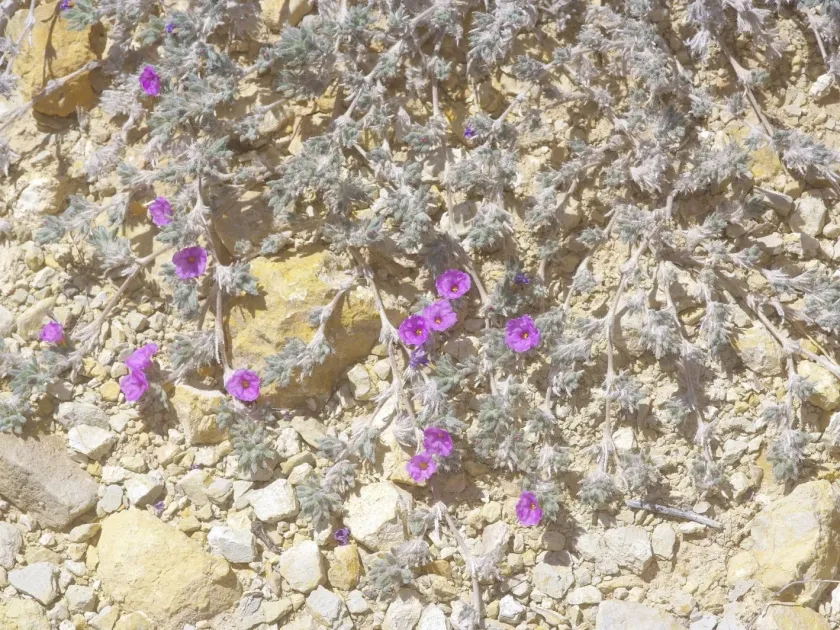
Tiquilia hispidissima is a perennial subshrub belonging to the Boraginaceae family. The plant is botanically adapted to thrive in harsh environments, exhibiting specific physiological mechanisms that allow it to remain dormant during extreme droughts and resume growth rapidly upon water availability.
Native to the arid regions of North America, this species is a critical component of desert ecosystems. It serves as a natural stabilizer in habitats where moisture levels are too low for conventional agricultural crops to survive, demonstrating high efficiency in water-use physiology.
Soil requirements for this species are specific: it mandates well-drained, porous, and sandy soil structures. The root system is highly specialized for searching out moisture in deep soil profiles, making the species unsuitable for compacted or waterlogged soils, which cause immediate root rot.
Climate adaptation involves high heat tolerance and the ability to withstand extreme solar radiation. From an agricultural perspective, the plant is not a commercial crop in the traditional sense but rather an essential tool for restoration ecology in zones where desertification poses a major threat to stability.
The primary utility of Tiquilia hispidissima lies in land reclamation. By creating a ground cover that binds loose particles, it effectively reduces soil loss from wind erosion. It is considered an important botanical resource for sustainable land management in hyper-arid agricultural environments.