
Voinier's Tetrastigma
Tetrastigma voinierianum
Description
Growing requirements
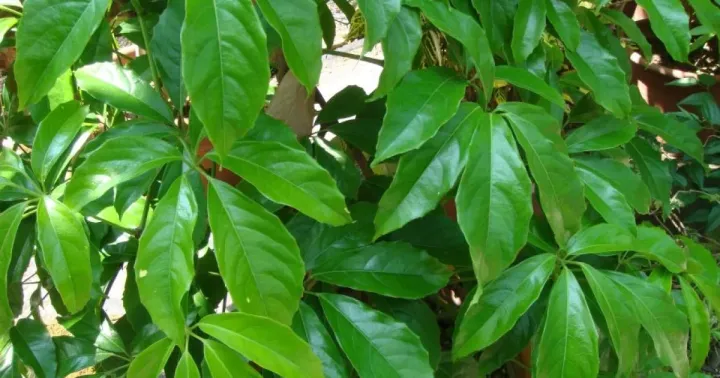
Voinier's Tetrastigma (Tetrastigma voinierianum) is a vigorous climbing vine belonging to the Vitaceae family. Originating from the tropical rainforests of Southeast Asia, it is known for its large, compound leaves and rapid growth rate, making it a prominent plant in indoor agricultural and horticultural settings.
The plant requires bright, indirect light to maintain its structural integrity and leaf coloration. Exposure to direct midday sun can result in leaf scorching and dehydration. It thrives best in environments where temperatures remain between 18 and 25 degrees Celsius throughout the growing season.
Soil requirements dictate a well-draining, nutrient-rich medium. A mix containing loam, leaf mold, and coarse sand provides the necessary aeration for the robust root system. Proper drainage is essential to prevent waterlogging, which is a significant factor in plant failure.
Agrotechnical practices include consistent watering regimes during the spring and summer months, coupled with occasional misting to maintain high humidity. Fertilizer applications should be focused on the active growth phase, utilizing balanced liquid fertilizers to support the production of heavy foliage.
The primary use of this crop is ornamental, specifically for vertical landscaping in large conservatories, botanical gardens, and spacious architectural interiors. Its capacity to cover large wall surfaces rapidly makes it an efficient biological tool for greening vast spaces.
Main diseases and pests
Pest management is focused on controlling spider mites, mealybugs, and scale insects, which frequently infest the plant under suboptimal humidity conditions. Regular inspection of the undersides of the leaves is critical for early detection and mitigation.
Fungal diseases, primarily root rot, occur when moisture levels in the substrate are not adequately managed. Maintaining air circulation and ensuring the root zone does not sit in saturated soil are the most effective prophylactic measures against fungal pathogens.