
Tennessee coneflower
Echinacea tennesseensis (Beadle) Small
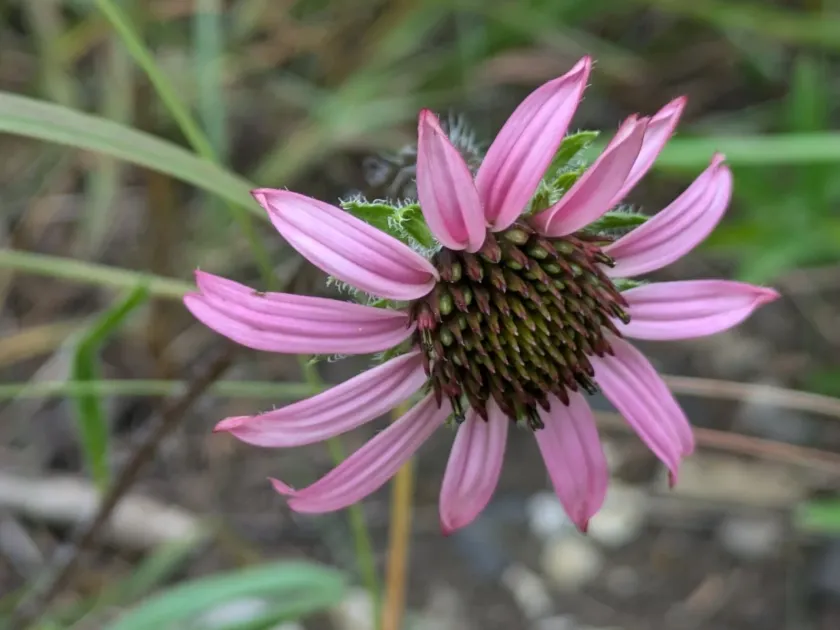
Description
Sowing dates
Tennessee coneflower (Echinacea tennesseensis) is a perennial herb belonging to the Asteraceae family. For agricultural production, seeds are typically sown in late autumn or in spring after a necessary stratification period.
When sowing in spring, seeds require 30–45 days of cold stratification to break dormancy and ensure uniform germination. Seeds should be sown at a shallow depth of 0.5–1 cm to provide adequate conditions for sprouting.
Growth of seedlings is relatively slow, making early weed control in the rows essential for development. During the first growing season, the plant primarily focuses on establishing a strong rosette of basal leaves.
Transplanting from nursery trays is a recommended practice to improve crop yield. Starting seedlings in controlled environments allows for a more robust plant before moving them to the field in late spring.
The recommended planting density for commercial fields is a spacing of 40–50 cm between plants within rows, with inter-row spacing of 60 cm to allow for maintenance and harvesting equipment.
Growing requirements
This species thrives in sunny locations with full sun exposure. It is notably more drought-tolerant than other Echinacea species, an adaptation stemming from its native limestone glade habitats in Tennessee.
Well-draining soil is the most critical requirement for successful cultivation. The plant is highly sensitive to waterlogged conditions, which can lead to rapid root rot during dormant seasons.
Optimal growth occurs in light, neutral to slightly alkaline soils. If soil is heavy or clay-based, soil amendments such as sand or fine gravel must be incorporated to improve aeration and drainage.
The plant is hardy and well-adapted to temperate climates, successfully surviving in USDA zones 5 through 8. It demonstrates high resilience to typical regional temperature fluctuations.
Fertilization should be managed carefully. While some nutrient input is beneficial, excessive nitrogen can lead to succulent growth that is less resistant to pathogens and reduces the concentration of beneficial phytochemicals.
Main diseases and pests
The primary threat to Tennessee coneflower is root rot, particularly in poorly drained soils. Managing soil moisture is the most effective preventative measure against this systemic issue.
High humidity levels can encourage the development of powdery mildew on the foliage. Maintaining proper spacing and ensuring adequate airflow between plants significantly reduces this risk.
Pests such as aphids and spider mites can infest the crop, feeding on leaf sap and causing general decline. Early detection through regular field scouting is vital for effective management.
Soil-borne larvae may occasionally target the root system, which can be devastating to the entire plant. Crop rotation is highly recommended to disrupt the life cycles of these pests.
Integrated pest management strategies, including the use of targeted fungicides and ensuring healthy soil biota, are essential for maintaining a healthy and productive perennial stand.
Harvesting
The aerial parts of the plant, including flowers and upper stems, are harvested during peak bloom in mid-summer, when the levels of active medicinal compounds are at their highest.
Roots should be harvested in the third or fourth year of growth when they have reached sufficient size and potency. Harvest usually takes place in late autumn after the plant enters dormancy.
Immediate drying is required for harvested material. Using a forced-air dryer at temperatures not exceeding 45°C preserves the heat-sensitive chemical components that define the plant's value.
Following the drying process, the material must be sorted and cleaned of debris. High-quality dry matter should retain a natural appearance and a characteristic aroma without any signs of moisture damage.
Storage should be conducted in dry, dark, and well-ventilated conditions to prevent degradation and ensure the longevity of the active compounds in the final herbal product.