
Purple coneflower
Echinacea purpurea (L.) Moench
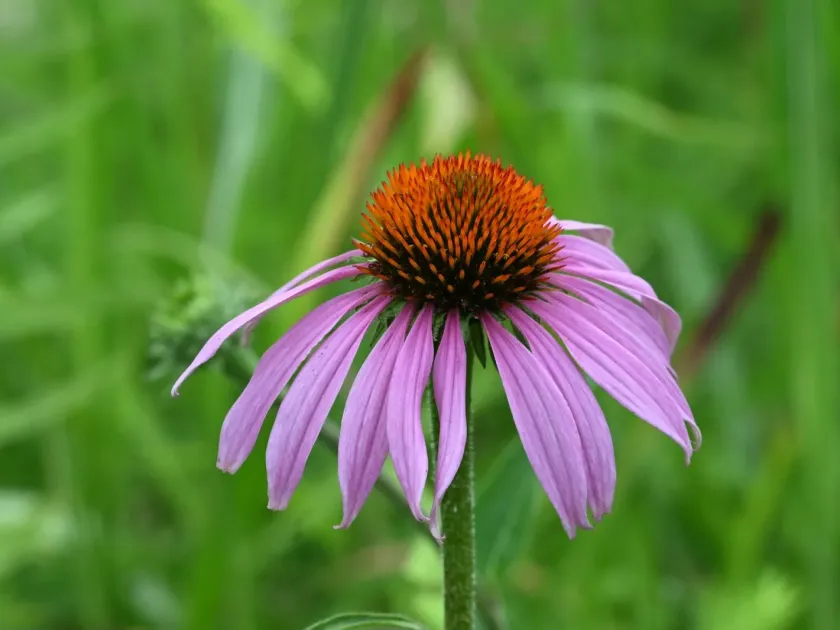
Description
Sowing dates
Purple coneflower (Echinacea purpurea) is typically propagated via seeds or vegetative division. Seeds are best sown in late autumn to allow for natural cold stratification during the winter months.
For spring sowing, seeds must undergo artificial stratification by chilling them at 0 to 5°C for 4 to 6 weeks. Germination occurs successfully when soil temperatures reach 15°C.
When starting indoors, seeds should be sown in trays during late February or March. Seedlings are pricked out into individual pots once the first set of true leaves appears.
Transplanting to the field should occur in May, ensuring all risk of frost has passed. Plants are usually spaced 45–60 cm apart to allow for optimal growth and air circulation.
Seed depth should be minimal, ranging from 0.5 to 1 cm. Applying a light layer of mulch helps retain moisture and prevents soil crusting, which can hinder delicate seedling emergence.
Growing requirements
Purple coneflower is a perennial herb belonging to the Asteraceae family, native to the prairies of North America. It is highly adaptable and thrives in various temperate climates.
The plant requires full sun for optimal performance. Reduced exposure to sunlight results in leggy growth, diminished flowering, and a lower concentration of secondary metabolites.
Well-drained, fertile loamy or sandy soils are ideal for cultivation. Echinacea is sensitive to waterlogged conditions, which can lead to root rot and poor plant development.
Once established, the plant exhibits significant drought tolerance due to its deep taproot system. However, regular irrigation during the first growing season is crucial for successful establishment.
Beyond its medicinal use as a popular immune support supplement, it serves as a valuable ornamental plant, attracting pollinators like bees and butterflies to the ecosystem.
Yield
Echinacea plantations reach peak productivity by their third growing season. The average yield for dried aerial parts (leaves and flowers) ranges from 1.5 to 2.5 metric tons per hectare.
Root harvest typically occurs in the third or fourth year of growth, with yields ranging from 1.0 to 1.5 metric tons of dried root mass per hectare, depending on soil fertility.
Productivity is enhanced through systematic mineral fertilization, particularly with balanced NPK levels, ensuring robust plant health and high-quality chemical profiles.
A productive field can be maintained for 5 to 6 years. Beyond this period, soil nutrient exhaustion and natural plant decline make it necessary to rotate to a new field location.
Standardized yields rely on consistent harvesting protocols that align with the plant's peak concentration of active compounds, such as polysaccharides and alkamides.
Main diseases and pests
Echinacea is relatively hardy, but it can be susceptible to fungal diseases like powdery mildew, gray mold, and fusarium wilt under conditions of poor air circulation and excessive humidity.
Preventing these threats relies on proper plant spacing and avoiding overhead irrigation that keeps the foliage constantly damp, creating an environment favorable for pathogens.
Slugs and snails are the primary pests affecting young plantings, often consuming the tender foliage. Monitoring is essential during the early stages of growth, especially in wet weather.
Aphids and certain plant bugs may also infest the stems and buds, sucking plant sap. While usually not fatal, heavy infestations can reduce the overall health and biomass yield.
Integrated pest management, including regular weeding and maintaining optimal soil health, effectively minimizes the need for chemical interventions in medicinal production.
Harvesting
The aerial parts are harvested during the peak flowering stage, typically between June and August. Stems are cut 10–15 cm above ground level to promote recovery and potential second cuts.
Roots are harvested in late autumn or early spring when the plant is dormant, as the concentration of therapeutic compounds is highest within the root system at these times.
After digging, the roots must be cleaned immediately, removing all soil and damaged sections. Thorough cleaning is vital to ensure the final product meets pharmaceutical standards.
Drying should be performed at temperatures not exceeding 45°C. Using a controlled dryer or a shaded, well-ventilated area ensures the preservation of volatile oils and active constituents.
The final dried product should be packaged in airtight, moisture-resistant containers and stored in a cool, dark place to maintain its potency for up to 3 years.