
Narrow-leaf coneflower
Echinacea angustifolia DC.
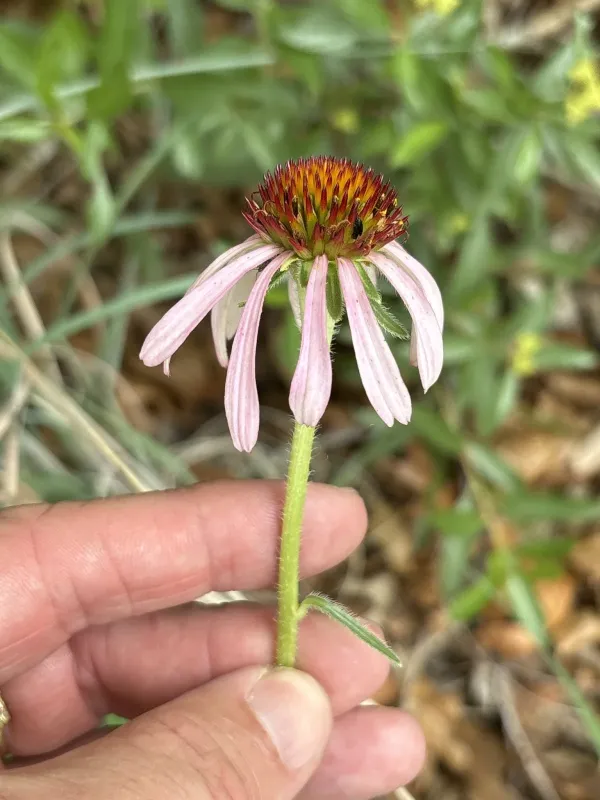
Description
Sowing dates
Sowing of Echinacea angustifolia is typically performed in late autumn or early spring, as the seeds require stratification to improve germination rates. Autumn sowing in October allows the seeds to undergo natural winter chilling.
For spring planting, seeds should be sown as early as the soil can be worked. Pre-chilling the seeds in a moist environment for several weeks before sowing can significantly enhance the uniformity of emergence.
The seeds should be planted at a depth of approximately 1.5 to 2 cm. Maintaining soil moisture during the germination period is critical, as the small seeds are highly susceptible to desiccation at the surface.
In commercial field cultivation, seeds are sown in rows spaced 45 to 60 cm apart. This configuration facilitates mechanical weed control and proper airflow throughout the development stages of the crop.
The seeding rate typically ranges from 1.5 to 3 kg per hectare, depending on the germination percentage of the specific seed lot and the targeted stand density.
Growing requirements
Echinacea angustifolia is a perennial herbaceous plant belonging to the Asteraceae family. Native to the North American prairies, it is well-adapted to environments with distinct dry and wet cycles.
The plant demands full sun exposure for optimal growth. Insufficient sunlight significantly inhibits the accumulation of essential medicinal compounds, such as echinacosides and alkylamides, in the roots.
Soil requirements include well-drained, fertile sandy loam or silty soils. The plant thrives in neutral to slightly alkaline pH levels and performs poorly in heavy, waterlogged clay soils.
Proper drainage is the most critical factor in successful cultivation. Excessive water retention in the root zone leads to root rot and long-term degradation of the plant's physiological health.
During the first year, management focuses heavily on weed suppression. As the plant is slow-growing in its initial phase, competition from weeds must be minimized through consistent cultivation between rows.
Yield
The primary harvest target for Echinacea angustifolia is the root system, which contains the highest concentration of bioactive constituents. Harvesting is generally scheduled for the third or fourth year of growth.
Average yields of dry roots can vary from 1,000 to 2,000 kg per hectare. Yield is highly dependent on soil fertility, moisture availability, and the specific age of the plantation.
Fertilization with phosphorus and potassium is recommended to stimulate robust root development. Excessive nitrogen should be avoided to prevent weak growth and susceptibility to pathogens.
Quality parameters are defined by the chemical profile of the plant. Therefore, maintaining optimal agronomic conditions ensures that the crop meets stringent pharmaceutical industry standards.
Managing the plant density and nutrition balance is essential for achieving high yields without compromising the structural integrity of the medicinal parts.
Main diseases and pests
Root rot, often caused by poor drainage and fungal pathogens like Pythium or Phytophthora, is the most destructive threat to the crop, especially in heavy or waterlogged soils.
Powdery mildew can infect foliage during periods of high humidity or poor ventilation. While primarily an aesthetic issue, severe infestations can reduce the plant's overall energy reserves.
Aphids and various bug species can feed on the foliage, potentially spreading viral diseases. Regular monitoring is necessary to keep pest populations below the economic injury level.
Nematodes pose a hidden threat by attacking the root system, which manifests as stunted growth and poor biomass production, directly impacting the final harvest yield.
Preventative measures, such as long-term crop rotation and using certified disease-free planting material, are the most effective strategies for long-term health of the field.
Harvesting
Roots are harvested in the autumn after the foliage has died back. This timing ensures that the plant has translocated its maximum energy reserves into the roots for winter storage.
Mechanical harvesting is conducted using root diggers or modified plows. The roots must be lifted carefully to avoid unnecessary breakage or damage to the medicinal tissue.
Post-harvest processing involves thorough washing to remove all soil residues followed by dehydration in controlled-temperature dryers, keeping temperatures below 45°C to preserve bioactivity.
When the aerial parts are harvested for medicinal use, this is performed during the peak flowering stage using mechanical mowers designed for herbaceous crops.
Proper storage of the dried product is essential, requiring cool, dry conditions with adequate air circulation to prevent mold and the degradation of active chemical components.