
Echinacea atrorubens
Echinacea atrorubens (Nutt.) Nutt.
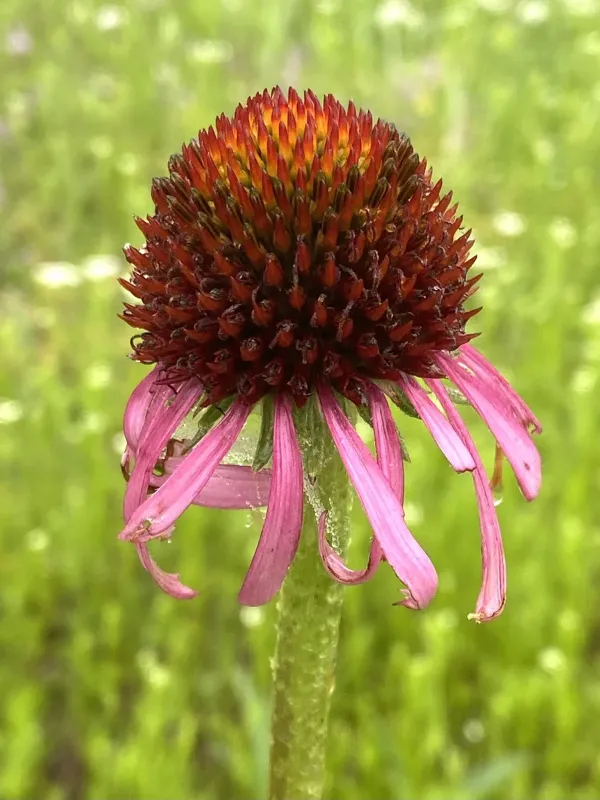
Description
Sowing dates
Echinacea atrorubens, a member of the Asteraceae family, is a distinct perennial plant appreciated for its botanical characteristics. Successful propagation requires careful preparation, as the seeds often benefit from a period of cold stratification to break dormancy.
Direct sowing in the field is ideally performed in early spring once the danger of severe frost has passed and the soil has warmed sufficiently. The seeds should be sown at a shallow depth of approximately 1 centimeter to ensure adequate germination rates.
For those utilizing indoor starting techniques, sowing in trays during late winter allows for stronger, more uniform seedlings. These should be transplanted once the local climate permits consistent growth without the risk of frost damage.
Planting density is crucial for long-term health; spacing plants at least 40 to 50 centimeters apart prevents the overcrowding that often leads to moisture-related diseases. Proper airflow between plants is essential for their development.
As a long-lived perennial, careful site selection is mandatory, as this plant thrives when left undisturbed for several consecutive years. Establishing a permanent spot with well-draining soil ensures the crop will return annually.
Growing requirements
This species is highly adaptable but performs best in well-draining, moderately fertile soils. Sandy or loamy substrates are preferred to ensure that root systems do not suffer from waterlogging, which is a major inhibitor of growth.
Full sun is necessary for the robust development of Echinacea atrorubens. While it can tolerate partial shade, insufficient light often results in weaker stems and a lower concentration of the secondary metabolites required for its medicinal use.
Once established, the plant exhibits remarkable drought tolerance. However, during the initial year of growth, supplemental irrigation is recommended during hot, dry spells to help the root system anchor effectively.
Nutrient management should be conservative. Excessive nitrogen fertilization promotes rapid but "soft" growth that is more susceptible to environmental stress and pests, so a balanced, slow-release approach is generally preferred.
Winter hardiness is a key feature of this species. In regions with harsh winters, providing a layer of organic mulch around the base of the plant can help regulate soil temperature and protect the crowns from extreme frost heave.
Main diseases and pests
The primary threats to this crop include fungal infections like powdery mildew, which can spread rapidly in humid, poorly ventilated conditions. Sanitation and spacing are the most effective preventive measures.
Root rot represents a significant danger, usually stemming from poor drainage or excessive watering. Maintaining the integrity of the soil structure and ensuring it does not stay saturated is vital for preventing systemic failure.
Insect pests, including aphids and various bugs, may congregate on the developing flower buds. These should be managed using integrated pest management techniques, prioritizing organic solutions to maintain the quality of the herbal product.
Slugs and snails can cause damage to young foliage early in the season. Utilizing barriers or traps around young plants is often sufficient to prevent significant leaf loss before the plants mature and become less attractive to these pests.
- Implementing strict crop rotation protocols to avoid soil-borne diseases.
- Regular weeding to reduce competition for light and nutrients.
- Monitoring for early signs of discoloration or wilting to intervene quickly.
Harvesting
The harvest of the aerial parts, specifically the flowering tops, is conducted during the height of the blooming season. This timing ensures that the concentration of active plant compounds is at its peak for therapeutic processing.
Clipping the stems approximately 15 centimeters below the flower head provides the best balance between quality and the plant's ability to recover for future seasons. Harvesting should be performed on a dry, sunny day.
The roots are harvested during the plant's dormant phase, usually in late autumn or early spring. This is when the plant stores the highest level of reserves in its root system, making it the ideal time for collection.
Post-harvest processing involves thorough cleaning of the roots to remove all soil debris, followed by slicing them into smaller sections to facilitate even drying. Air-drying in a shaded, ventilated area is the preferred method.
Properly cured and dried plant material must be stored in airtight, light-proof containers. This protects the medicinal constituents from oxidation and moisture, extending the shelf life of the harvest for several years.