
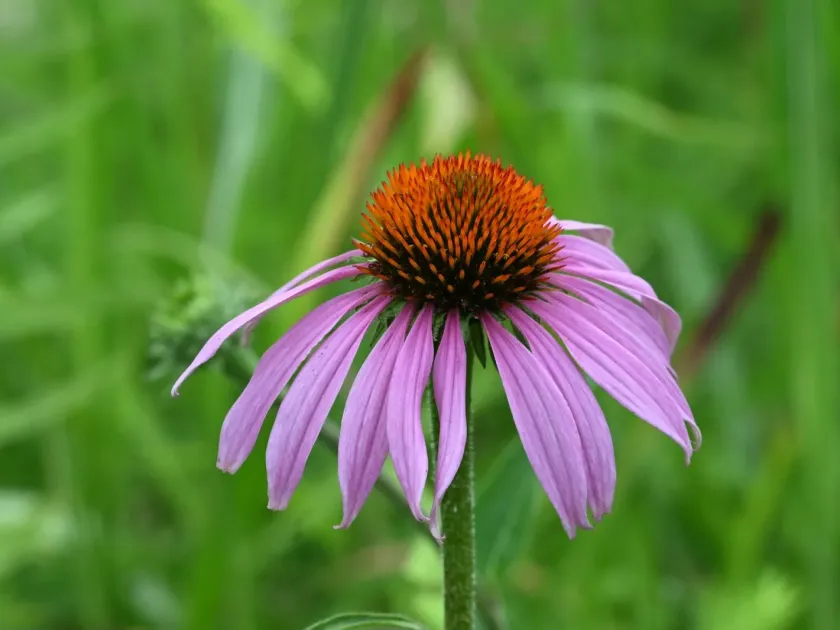
Purple coneflower
Echinacea purpurea x Echinacea tennesseensis
Description
Sowing dates
Echinacea purpurea is typically propagated via seeds, which require stratification for 30 to 45 days at low temperatures to break dormancy.
In large-scale farming, seeds are sown in autumn or early spring using precision seeders with a row spacing of approximately 50–60 centimeters.
The optimal sowing depth is shallow, as seeds need light exposure to trigger germination and prevent them from rotting in damp soil.
Greenhouse propagation is common for early-season planting, using sterile substrates and maintaining a stable temperature of 20 degrees Celsius.
Transplanting the seedlings to the field occurs when they develop at least 4 true leaves and the risk of frost has completely passed.
Growing requirements
Native to North America and belonging to the Asteraceae family, the plant thrives in temperate climates with a preference for full sun exposure.
It performs best in deep, fertile, well-draining soils with a neutral pH level, though it can tolerate a variety of soil textures including loams.
Proper water management is essential; while the plant is drought-tolerant once established, it requires consistent moisture during the early vegetative stage.
Winter hardiness is a major advantage of Echinacea, as it remains dormant during cold periods and regrows vigorously in the following spring season.
Effective agrotechnical practices include mulching to suppress weeds and the use of organic compost to enrich the soil structure over time.
Yield
The primary economic value of Echinacea comes from its roots, rhizomes, and aerial parts, which are rich in alkylamides and polysaccharides.
Annual yields for dried herbal material range from 1,500 to 2,500 kg per hectare, depending on soil fertility and plant density per square meter.
The root biomass is usually harvested after the plants reach 3 or 4 years of age, ensuring the highest concentration of medicinal components.
Productivity remains stable for several years, allowing for a long-term production cycle before the field requires crop rotation or replanting.
Commercial growers utilize specialized machinery for harvesting and primary processing to ensure the purity and quality of the final drug product.
Main diseases and pests
The most common disease impacting Echinacea is powdery mildew, which can be mitigated by ensuring adequate air circulation and reducing humidity.
Root rot and crown rot are frequent issues in heavy, poorly drained soils, often requiring chemical or biological intervention if drainage fails.
Pests such as aphids and whiteflies can infest the plants, causing structural damage and potentially transmitting viruses that impact yield quality.
Weed control is critical in the first year of the crop, as the young plants grow slowly and are easily outcompeted by aggressive field weeds.
Integrated pest management strategies focusing on biological controls are preferred to maintain the quality standards of organic medicinal crops.
Harvesting
Aerial parts are harvested during full bloom, specifically when the ray florets are fully extended and the central cones are vibrant.
Roots are harvested in late autumn after the foliage has naturally withered, as this allows for the accumulation of nutrients in the storage organs.
Harvested raw materials must be cleaned thoroughly to remove soil particles before undergoing a drying process at controlled temperatures below 45 degrees.
Rapid and uniform drying is essential to prevent the degradation of active chemical compounds and to preserve the shelf life of the final harvest.
Final processing involves sorting and milling the raw materials, which are then stored in climate-controlled environments until ready for market.