
Parish's umbrellawort
Tauschia parishii
Description
Growing requirements
Tauschia parishii, commonly known as Parish's umbrellawort, is a perennial herb belonging to the Apiaceae family. It is native to the mountainous regions of Southern California, demonstrating high resilience to specific local environments.
The plant thrives in rocky, well-draining soils that mimic its natural alpine or semi-arid habitat. It possesses a deep taproot, which is a structural adaptation for accessing water deep within the soil profile during dry seasons.
Climate requirements include a distinct seasonal cycle with cool, moist winters and dry summers. The plant enters dormancy during the hottest months to conserve energy and water, which is crucial for its survival.
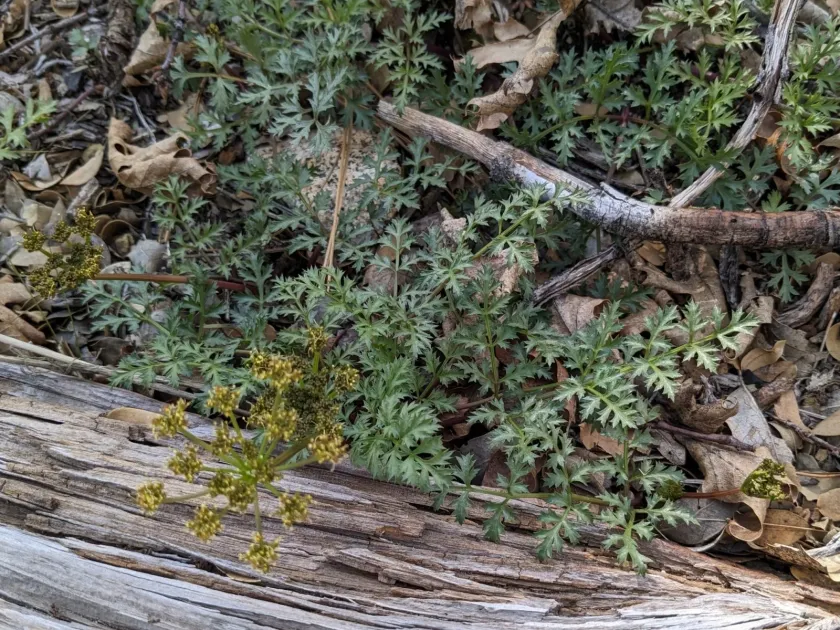
Botanically, it is recognized by its delicate, finely divided foliage and umbel inflorescences. The structure of the plant is optimized for photosynthesis under high light conditions typical of open mountain slopes.
Cultivation of this species requires minimal human intervention, provided that the soil drainage is excellent. It is a slow-growing perennial that integrates well into xeriscaping projects in compatible climate zones.
Main diseases and pests
Root rot is the most significant threat to Tauschia parishii, usually induced by waterlogged conditions or poorly draining substrate in garden settings.
Fungal pathogens targeting the leaves, such as various species of rust and leaf spot, can appear if humidity levels remain high for extended periods without adequate air circulation.
Aphids and mites are the primary insect pests that can infest the plant, potentially causing stunting if populations reach high levels during the growing season.
Invasive weed species often outcompete Parish's umbrellawort for soil nutrients and light, posing a major threat to the integrity of its natural wild populations.
Improper fertilization, particularly excessive nitrogen, negatively impacts the plant's natural morphology and lowers its resistance to abiotic stressors.