
Tauschia arguta
Tauschia arguta
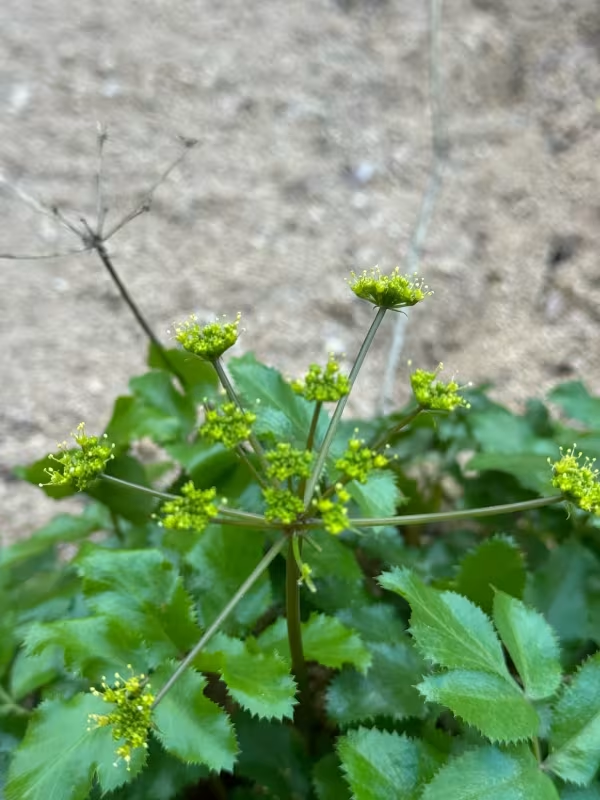
Description
Growing requirements
Tauschia arguta, commonly known as the Southern Umbell, is a perennial herb belonging to the Apiaceae (carrot) family. It is native to the coastal ranges and foothills of California.
The plant features a basal rosette of finely divided leaves and produces small yellow flowers in umbels. It is well-adapted to the Mediterranean climate, where it thrives during the wet season and remains dormant during the dry summer.
For successful cultivation, the species requires well-drained, sandy or loamy soils. It is highly intolerant of waterlogged conditions, which can lead to the rapid decay of its root system.
When selecting a site, it is crucial to ensure full sun exposure. The plant exhibits high heat tolerance once established, making it a potentially resilient crop for arid regions with appropriate irrigation.
Historically, the roots were consumed by indigenous populations, which suggests potential value for niche food markets or as a medicinal plant ingredient due to its unique chemical profile.
Main diseases and pests
The primary threat to Tauschia arguta is soil-borne pathogens, specifically fungi that thrive in poor-draining substrates, leading to root rot.
Powdery mildew represents a significant risk to the foliage during periods of high humidity, particularly when there is insufficient airflow between the plants.
Aphids are the most common insect pests, often attacking the tender stems and flowering buds during the active growing season in early spring.
In some regions, larvae of specific flies can burrow into the root collar, causing stunted growth and increasing the plant's susceptibility to secondary infections.
Proper field management, including the use of raised beds to improve drainage and integrated pest management, is essential for maintaining a healthy and productive crop.