
Tradescantia fluminensis
Tradescantia fluminensis Vell.
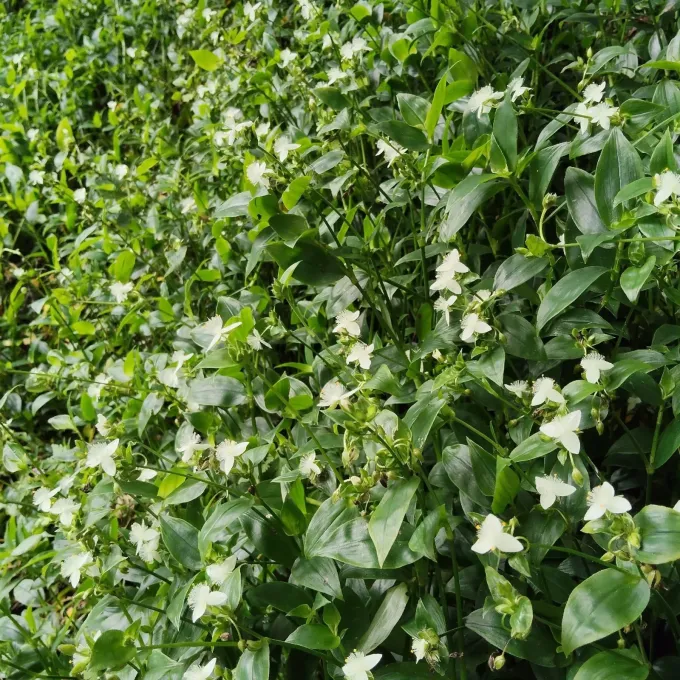
Description
Growing requirements
Tradescantia fluminensis, commonly known as river spiderwort, is a herbaceous perennial belonging to the Commelinaceae family. Native to South America, it has spread to various regions due to its aggressive growth habit and adaptability to moist, shaded environments.
Botanically, the plant is characterized by trailing, succulent stems that root easily at the nodes. The leaves are typically ovate, smooth, and may have a glossy finish, often forming dense mats that serve as effective ground cover in appropriate tropical settings.
Climate requirements include protection from direct sunlight and frost. The plant thrives in temperatures ranging from 18 to 25 degrees Celsius, preferring steady environments with high ambient humidity to maintain turgidity in its leaves.
Soil conditions are critical for the health of this crop. It requires a well-draining, nutrient-rich substrate, typically peat-based or a light loam mixture with a near-neutral pH balance to prevent root zone stress.
General maintenance involves regular, consistent watering cycles to keep the soil moist but not waterlogged. Pruning is often necessary to prevent the stems from becoming sparse and to encourage lateral branching, which enhances the plant's overall density and vigor.
Main diseases and pests
Common pests include spider mites and mealybugs, which are particularly problematic in environments with low humidity. These pests can rapidly drain sap from the plant, leading to stunted growth and leaf chlorosis if left untreated.
Fungal pathogens such as grey mould are primary threats when humidity levels are excessively high and air circulation is poor. These conditions often stem from overwatering, which creates a stagnant, micro-environment favorable for pathogen development.
Aphid infestations are frequently observed on the succulent growing tips of the stems. Control measures include manual removal, application of insecticidal soaps, or the introduction of biological control agents in professional nursery settings.
Prevention is the most effective strategy against crop failure. Maintaining proper spacing between plants is essential for ensuring adequate airflow, which significantly reduces the probability of fungal infections taking hold.
When pests are detected, prompt isolation and treatment are vital. As Tradescantia fluminensis has high regenerative potential, infected sections can often be pruned away followed by a targeted treatment of the remaining healthy plant matter.