
Sicilian fir
Abies nebrodensis (Lojac.) Mattei
Description
Growing requirements
The Sicilian fir (Abies nebrodensis) belongs to the family Pinaceae. It is a rare conifer that represents a strict endemic species found solely in the Madonie mountains of Sicily.
This tree requires specific ecological conditions, thriving on limestone-derived soils at altitudes between 1400 and 1600 meters, where the climate is cool and temperate.
Botanically, it is an evergreen tree reaching heights of 15 to 20 meters, characterized by a pyramidal crown that becomes more open and irregular as the tree matures.
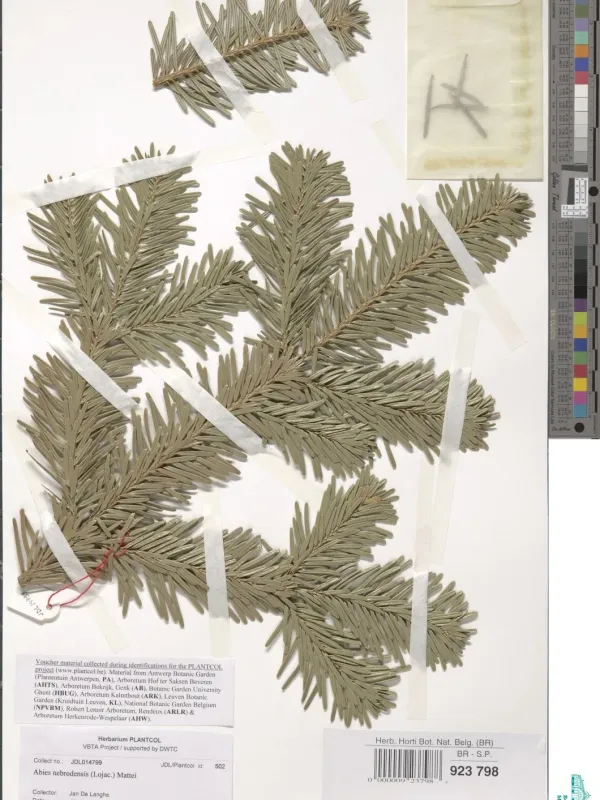
The needles are linear and dark green, featuring two distinct stomatal bands on the underside, which are characteristic traits of this specific Abies species.
Given its status as a critically endangered plant, agricultural use is currently non-existent; preservation efforts focus exclusively on botanical restoration and seed banking.
Main diseases and pests
The primary threat to Abies nebrodensis is the limited size of its natural population, making it highly susceptible to environmental fluctuations and habitat loss.
Pathogenic fungi pose a risk to the tree's health, particularly when atmospheric humidity levels remain high for extended periods, encouraging root and needle rot.
Insects, such as aphids and bark beetles, represent a significant threat to young saplings, potentially stunting growth or killing the tree in its vulnerable early stages.
Overgrazing by livestock significantly hinders natural regeneration by consuming seedlings before they reach a stage where they can survive independently.
Conservationists employ protective fencing and strict forest management protocols to mitigate human-induced impacts and ensure the species' long-term survival.