
Shorea negrosensis
Shorea negrosensis Foxw.
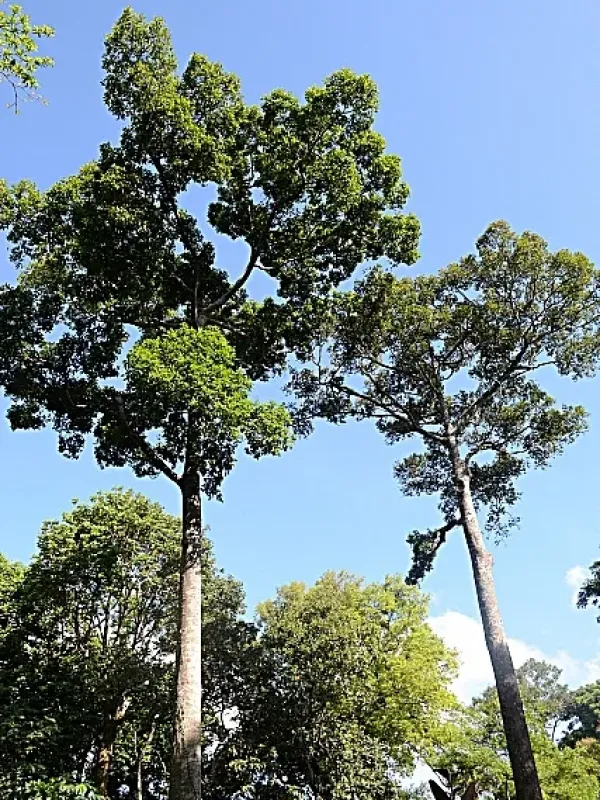
Description
Sowing dates
Shorea negrosensis is a slow-growing forest species, and its natural regeneration occurs primarily under the canopy of primary or secondary tropical forests. The seeds of this species have low longevity, requiring immediate sowing shortly after they fall during the ripening period.
In nurseries, seeds are sown in nutrient-rich substrates with high humus content, providing shade during the initial growth stages. Optimal soil moisture must be maintained through regular irrigation, as seedlings are highly sensitive to desiccation.
Transplanting seedlings to permanent forest sites is typically performed at the onset of the rainy season to ensure high survival rates. Standard planting patterns depend on restoration goals but usually involve sparse spacing to minimize intraspecific competition.
Site preparation includes clearing invasive fast-growing shrubs that may suppress the development of the slow-growing Shorea seedlings. Maintenance during the first years of the culture's life is a decisive factor for forming a straight and high-quality trunk.
A biological feature of the species is periodic fruiting, which complicates the predictable acquisition of planting material. Nurseries rely on the mass-fruiting cycles of dipterocarps to plan their production scales.
Growing requirements
Shorea negrosensis belongs to the Dipterocarpaceae family and is endemic to the Philippines. This tree requires a humid tropical climate with a consistent distribution of rainfall throughout the year.
The plant prefers deep, well-drained alluvial soils or red soils typical of lowland and hilly tropical forests. It does not tolerate waterlogging or stagnant water in the root zone, which can lead to root system decay.
For optimal growth, the tree requires high air temperatures and stable environmental humidity. The crop adapts poorly to sharp temperature fluctuations and open areas with intense direct sunlight at a young age.
In its natural habitat, the species occupies the upper forest canopy, reaching heights of over 50 meters. Developing a healthy tree requires sufficient space for its vast root system and a crown capable of capturing solar energy.
The soil must be rich in organic matter; therefore, preserving forest litter is a crucial agrotechnical measure for maintaining soil fertility.
Yield
The economic use of Shorea negrosensis is primarily focused on obtaining high-value timber, known on the market as dark red Philippine mahogany. Plantation productivity is measured by the volume of wood accumulated over a rotation period, typically ranging from 40 to 60 years.
The timber of this species is highly valued in carpentry for its durability, ease of processing, and attractive texture. It is widely used for furniture production, decorative veneer, and construction of internal boat components.
Biomass yield depends significantly on the intensity of forest management and the quality of sanitation logging. Proper thinning allows for increased growth rates of selected "future trees" and improves the output of high-quality timber.
Unlike annual crops, yield is measured in cubic meters of wood per hectare upon reaching technical maturity. Economic efficiency correlates directly with the market value of high-quality mahogany timber.
Illegal logging and resource depletion have led to the necessity for strict certification of timber harvesting. Sustainable forest management is now an essential condition for long-term production from Shorea forests.
Main diseases and pests
The primary threat to both plantations and natural stands is habitat loss due to land-use changes. Shorea negrosensis is extremely vulnerable to forest fires, which destroy young trees and damage the bark of mature specimens.
Root diseases and stem rot caused by fungal pathogens can infect weakened trees. In high-humidity conditions, fungi spread rapidly, especially if drainage is impaired or planting density is too high.
Insect pests, such as stem borers and termites, can cause significant damage to timber quality by creating galleries in the trunks, reducing the material's structural integrity.
Infestations of defoliating insects can significantly slow down annual growth, weakening the tree and making it susceptible to secondary infections. Monitoring forest health in large estates is a regular requirement.
Invasions of aggressive weed species also have a negative impact, as they compete for nutrients and water. Regular weeding in nurseries and young forests is critical for protecting the crop from such biological threats.
Harvesting
Harvesting is conducted after the tree reaches commercial dimensions and appropriate maturity age. The process requires a skilled approach to minimize damage to adjacent growing trees.
Using selective logging methods allows for the preservation of the forest community structure while ensuring a sustainable wood yield. Before felling, trunks are evaluated for potential defects and pest infestation.
After harvesting, the wood requires proper seasoning to prevent cracking and warping. Dark red meranti requires moisture control to maintain its unique physical properties.
Logistics of harvesting are often complicated by the rugged terrain where Shorea grows, requiring the use of specialized forestry machinery or manual labor with light equipment.
The entire harvesting process is strictly regulated by environmental standards to prevent soil erosion and degradation of the ecosystems where this valuable species grows.