
Shorea contorta
Shorea contorta S. Vidal
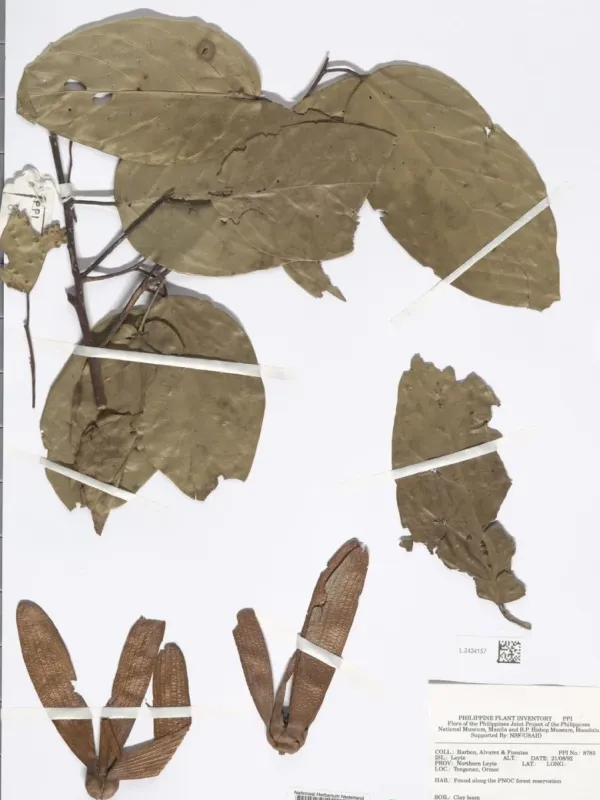
Description
Growing requirements
Shorea contorta is a prominent evergreen tree species belonging to the Dipterocarpaceae family. Often referred to as white lauan, it stands as one of the most significant timber-producing species in the tropical rainforests of the Philippines.
The tree thrives in deep, fertile, and well-drained soils, typically found in low-to-mid elevation tropical forests. It requires a humid climate with high annual rainfall and constant temperatures, as it is highly sensitive to prolonged dry spells during its growth phase.
Botanically, the species is recognized by its massive, straight trunk and simple, leathery leaves. A distinguishing feature is its fruit, which possesses wing-like lobes that allow for effective wind-assisted seed dispersal across the forest canopy.
Cultivation requires specific silvicultural practices, emphasizing the need for shade during the seedling stage. As the trees develop, they demand increased canopy clearance to receive adequate solar radiation, which accelerates biomass accumulation and trunk development.
Economically, Shorea contorta is highly prized for its timber. The wood is widely utilized in the construction sector, high-quality furniture manufacturing, and decorative interior finishing, owing to its durability and excellent workability.
Main diseases and pests
The primary threat to Shorea contorta populations is large-scale deforestation and habitat loss, which limits natural regeneration and reduces the availability of mature, seed-bearing mother trees in the ecosystem.
In forest nurseries, seedlings are susceptible to damping-off and root rot diseases, often caused by poor drainage and excessive moisture management in the growing containers or nursery beds.
Various wood-boring insects act as significant pests, attacking both standing trees and harvested logs. These infestations compromise the structural integrity of the wood and can lead to secondary infections by wood-decay fungi.
Integrated pest management strategies are crucial for sustainable plantations, involving strict adherence to forest hygiene and the monitoring of insect population cycles to prevent outbreaks.
Effective management includes protecting the natural biological diversity of the forest, which promotes the presence of natural predators that keep pest insect populations within manageable limits.