
Scleria tessellata
Scleria tessellata
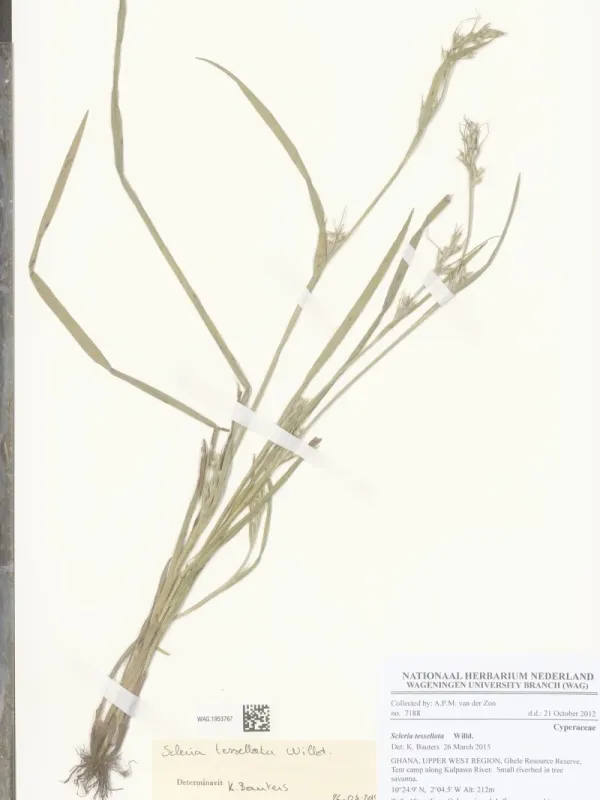
Description
Growing requirements
Scleria tessellata is a perennial herbaceous plant belonging to the Cyperaceae family, commonly known as the sedge family. It is characterized by its stiff, triangular stems and specialized reproductive structures that distinguish it from other wetland grasses.
The species originates from tropical and subtropical regions across Asia, Australia, and Africa. It naturally thrives in diverse environments, ranging from seasonally flooded grasslands and marshes to the margins of ponds and riverbanks where moisture is abundant year-round.
Regarding cultivation requirements, Scleria tessellata demands high moisture levels and warm temperatures. It is not a drought-tolerant species; therefore, successful growth depends on maintaining a water-saturated soil environment, mimicking its native habitat.
The ideal soil for this plant consists of nutrient-rich, moist substrates such as peaty or silty soils. Proper drainage is necessary to prevent complete stagnation, although the plant is highly tolerant of the anaerobic conditions typically found in swampy landscapes.
In terms of хозяйственное (economic) utility, while Scleria tessellata is not a major agricultural commodity, it serves ecological roles in soil stabilization. Its dense root network helps anchor the soil in wetland areas, preventing sediment erosion and supporting local biodiversity.
Main diseases and pests
The primary threats to the health of Scleria tessellata include fungal pathogens that exploit the high-humidity environment. Leaf spot diseases are particularly common when air circulation is poor, potentially hindering the plant's photosynthetic capacity.
Pests such as stem-boring insects and sap-sucking aphids can cause localized damage to the foliage. In some ecosystems, snails and mollusks may feed on the young shoots, while subterranean nematodes represent a more persistent risk to the overall vigor of the root system.