
Scleria secans
Scleria secans
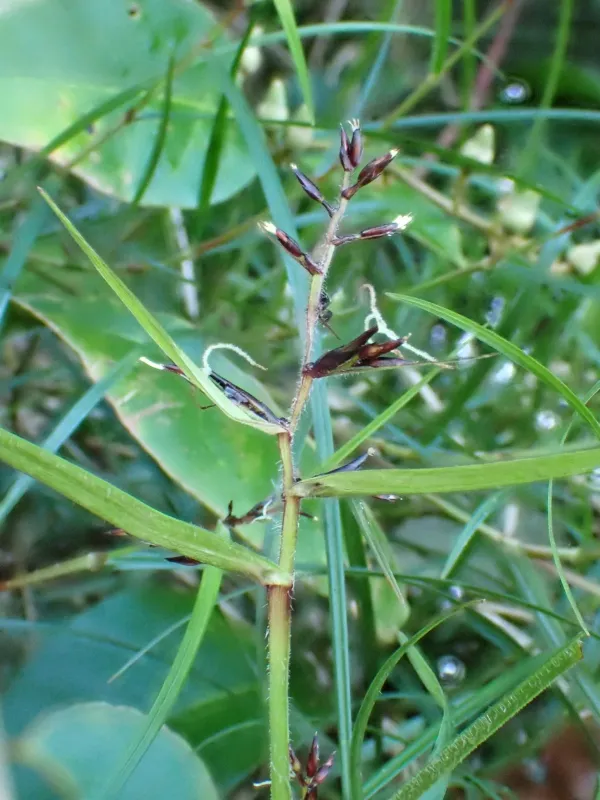
Description
Growing requirements
Scleria secans, commonly referred to as razor sedge, is a perennial herbaceous plant belonging to the Cyperaceae family. Within agricultural settings, this species is not considered a crop but rather a persistent weed species known for its ability to dominate abandoned or poorly managed lands.
The plant is native to the tropical and subtropical zones of Central and South America, as well as the Caribbean. It thrives in diverse environments, ranging from dense tropical forests and secondary growth areas to open clearings where it can quickly establish dense, sprawling colonies.
Botanically, the plant is characterized by its triangular, sharp-edged stems. These edges are fortified with silica, which makes them razor-sharp to the touch. This evolutionary adaptation serves as a defense mechanism against herbivores and creates a significant physical barrier for field workers.
The species demonstrates impressive environmental tolerance, successfully adapting to varying levels of moisture and soil composition. While it prefers humid conditions, its resilience allows it to persist across different microclimates, making it a difficult weed to control in tropical agricultural systems.
In terms of management, Scleria secans presents challenges due to its extensive root structure and the physical difficulty of manually clearing infested areas. Because of its sharp leaves and stems, it poses a recurring hazard to farmers and agricultural workers navigating tropical landscapes.