
Scleria racemosa
Scleria racemosa
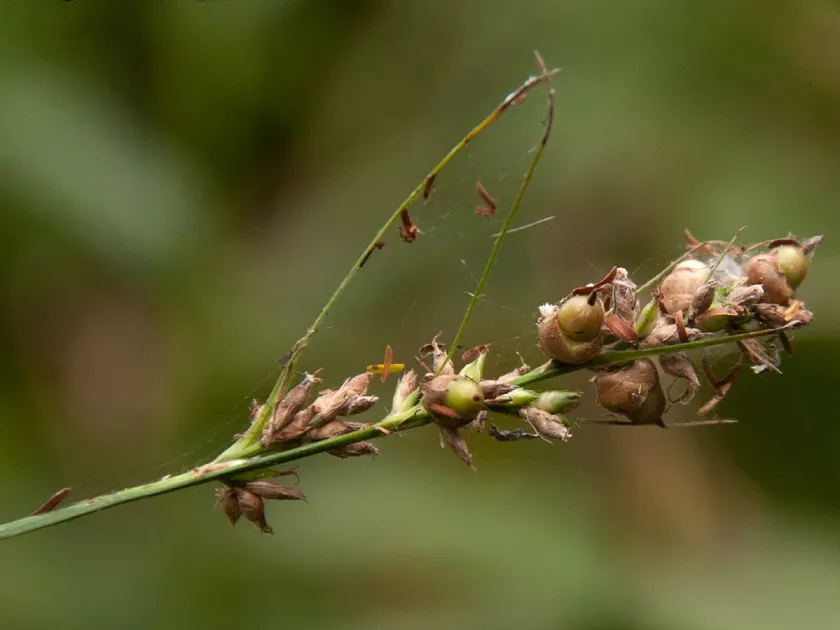
Description
Sowing dates
Scleria racemosa belongs to the Cyperaceae family and is a robust perennial herb adapted to moist tropical environments.
Sowing should be timed with the onset of the rainy season, ensuring soil moisture levels are conducive to rapid germination of the seeds.
Seeds are typically sown in rows, allowing for proper aeration and maintenance access between the plants.
The optimal germination temperature ranges between 25°C and 30°C, reflecting the plant's tropical origins and need for warmth.
Proper depth of sowing, usually around 1-2 cm, is crucial to protect the seeds from environmental stressors while allowing shoots to emerge easily.
Growing requirements
The plant thrives in fertile, well-draining soils that are rich in organic matter, supporting deep root penetration.
It prefers slightly acidic to neutral soil conditions, with pH levels ranging between 5.5 and 7.0 for maximum nutrient uptake.
Adequate water availability is essential throughout the growth cycle, as the species is highly sensitive to prolonged moisture deficits.
Full sun exposure is preferred for maximum biomass production, although the plant can tolerate partial shading in diverse agroforestry systems.
Consistent soil aeration is required to prevent root suffocation, especially in areas with high rainfall and heavy clay content.
Yield
Scleria racemosa is primarily utilized as a source of biomass, which serves as a supplemental forage material for livestock in tropical regions.
The nutritional profile of the plant makes it a useful component in integrated feeding programs when harvested at the peak vegetative stage.
Yield potential is significantly enhanced by nitrogen-rich fertilization and consistent irrigation schedules during dry spells.
With optimal management, the plant provides multiple harvests per season, contributing to sustainable land use in high-humidity areas.
The fiber content of the plant also suggests potential industrial utility, though it is currently focused on agricultural forage applications.
Main diseases and pests
Fungal diseases, including leaf rusts and various leaf spots, are the most common threats that manifest under high-humidity conditions.
Insect pests, such as stem borers, can inflict significant damage to the plant's architecture, negatively impacting its growth rate and yield.
Weed infestation is a primary concern during the establishment phase, requiring manual or selective mechanical weeding to minimize competition.
In cases of poor soil drainage, root rot pathogens can proliferate, leading to the rapid decline of localized sections within the plantation.
Implementing integrated pest management practices is essential to maintain plantation health and reduce the reliance on chemical interventions.
Harvesting
Harvesting is ideally performed before the seeds fully mature to maximize the forage quality of the leaves and stems.
Mechanized mowing is standard for large-scale operations, ensuring a uniform cut that promotes quick regrowth for the next harvest.
Post-harvest management involves immediate drying of the biomass to reduce moisture content and prevent the onset of spoilage or mold growth.
Care must be taken to remove plant debris from the field to disrupt the life cycle of potential pathogens and maintain field hygiene.
Properly baled or ensiled biomass should be stored in ventilated, dry structures to preserve its nutritional integrity throughout the storage period.