
Wood Scapania
Scapania nemorea
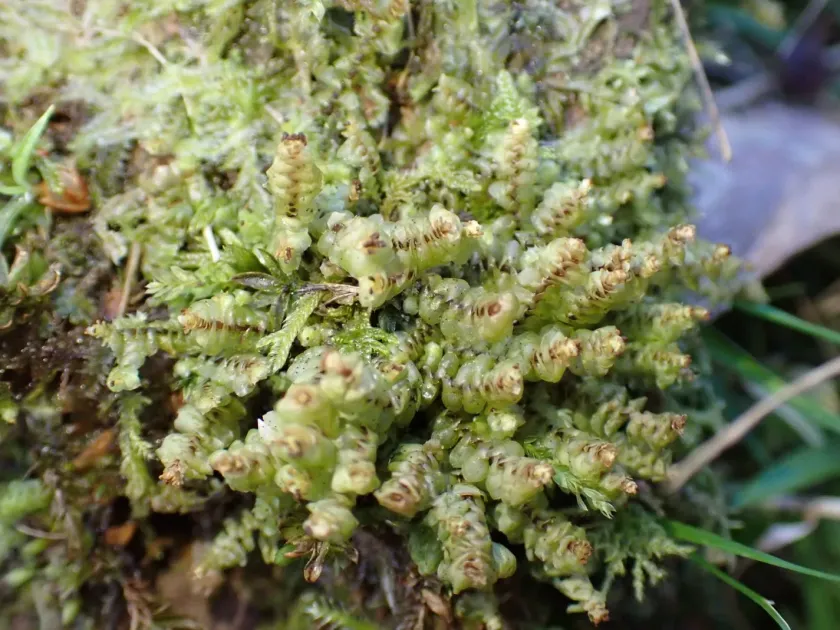
Description
Growing requirements
Wood Scapania (Scapania nemorea) belongs to the Scapaniaceae family and represents a significant group of liverworts. While not a conventional agricultural crop, it is a vital component of forest biodiversity, assisting in soil stability and water regulation within shaded environments.
The plant features distinctively folded leaves that form a V-shape, a morphological adaptation that allows it to capture and store moisture from the atmosphere. This structure enables the liverwort to survive in environments where water is intermittently available.
It is distributed across various forest regions in the Northern Hemisphere. It thrives primarily in cool, moist, and well-shaded areas, frequently colonizing moist rocks, rotting wood, and the damp soil at the base of old-growth trees.
The success of Scapania nemorea is tied to its microclimate requirements. High humidity and protection from direct sunlight are essential to prevent the dehydration of its delicate thallus. It is well-adapted to the temperate climate zone.
Regarding soil or substrate, the species is not picky, preferring moist, acidic to neutral environments. Its reliance on the substrate is minimal for nutrition, as it primarily gains nutrients from atmospheric precipitation and airborne particles.
Main diseases and pests
The primary threats to Wood Scapania are land-use changes, such as deforestation and drainage projects, which drastically alter the moisture levels required for its growth and survival within its typical habitat.
Air quality is a significant concern, as the species is highly sensitive to atmospheric pollutants, particularly sulfur dioxide. Its presence is often used as a bioindicator for overall air and forest health.
Fungal pathogens represent a biological risk, especially in conditions where excess moisture occurs without proper airflow, leading to the decay of the gametophyte tissues of the liverwort.
Invertebrate pests, such as small soil insects, can graze on the plant, although they rarely cause damage on a scale that would threaten the stability of the entire population.
Climate change, manifesting as prolonged droughts and increased temperatures, poses a major risk. Since the plant lacks a vascular system for deep water transport, it cannot recover once it has experienced severe desiccation.